





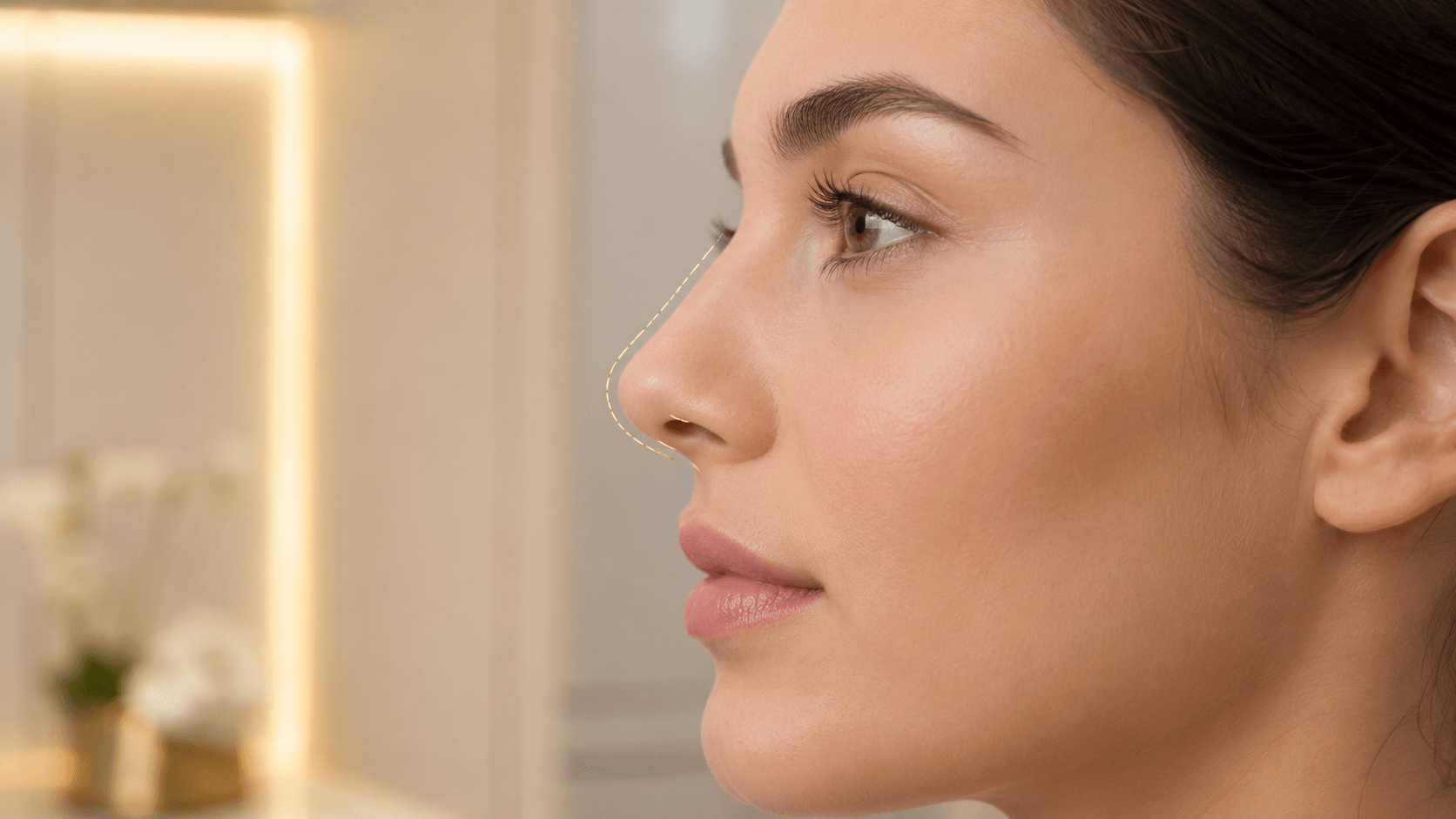
Rhinoplasty in Turkey for bulbous nose tips has become an increasingly searched topic among patients who want a more refined nasal appearance without losing natural facial harmony. A bulbous nasal tip can make the nose appear rounder, heavier, wider, or less defined from the front and three-quarter view, even when the bridge itself is not especially large. For many patients, the concern is not that the nose is dramatically oversized, but that the tip lacks structure, delicacy, or balance. This is why bulbous tip correction is one of the most nuanced areas of modern rhinoplasty.
A successful result in this area requires far more than simply making the tip smaller. The nasal tip is one of the most complex and expressive parts of the nose. Its shape is influenced by cartilage strength, skin thickness, soft tissue volume, symmetry, projection, rotation, and the relationship between the tip and the bridge. When patients begin researching rhinoplasty in Turkey for bulbous nose tips, they are often looking for a surgeon who understands how to refine the lower third of the nose in a way that looks elegant, believable, and stable over time.
Turkey has become a major destination for rhinoplasty because many surgeons focus extensively on nasal surgery and work with a wide variety of nasal anatomies. For patients with bulbous tips, this can be especially relevant, because tip surgery demands judgment, restraint, and structural understanding. The best outcomes do not come from aggressive removal. They come from shaping, support, and proportion.
What Makes a Nose Tip Look Bulbous
A bulbous nose tip is not caused by one single factor in every patient. In some noses, the lower lateral cartilages are naturally wide, round, or poorly defined. In others, the cartilages may not be especially large, but thick skin and soft tissue fullness can blur the shape underneath. Some patients have a combination of broad cartilages, thick skin, weak support, and mild asymmetry, all of which contribute to a tip that appears fuller than desired.
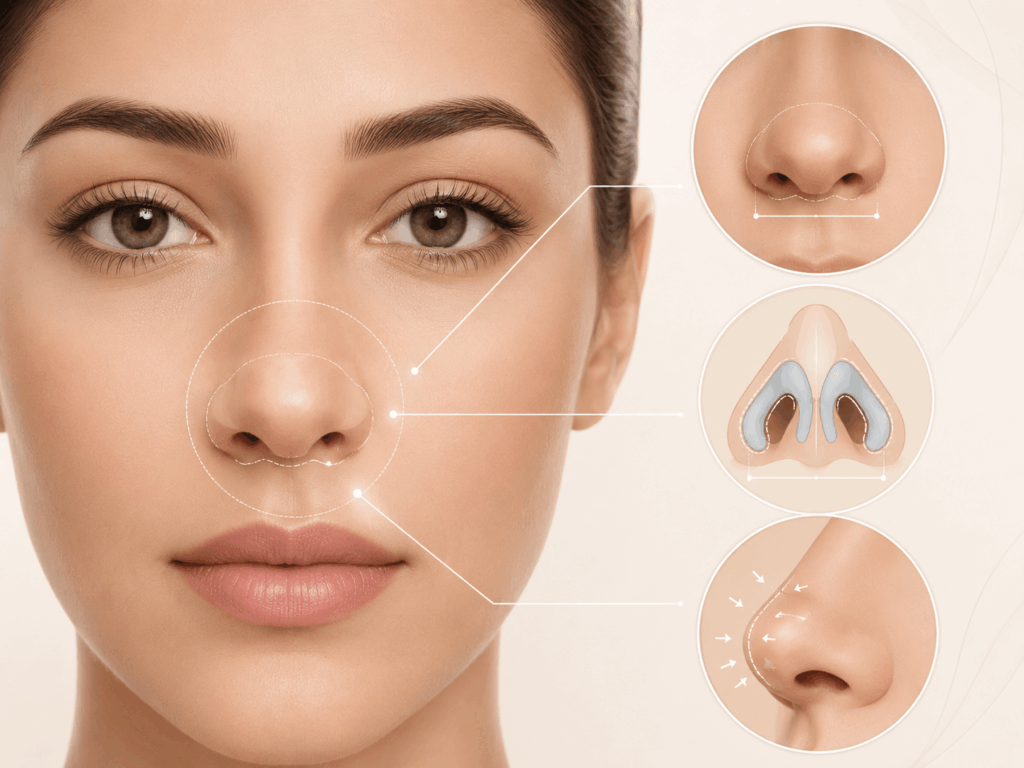
This distinction matters because rhinoplasty in Turkey for bulbous nose tips should never follow a one-size-fits-all formula. A patient with strong cartilage and moderate skin thickness may respond well to structural reshaping alone. A patient with dense skin and a heavy soft tissue envelope may require a very different strategy, with more emphasis on support and realistic definition rather than dramatic narrowing. The visible roundness of the tip is often the surface expression of deeper anatomical relationships, and the quality of the result depends on how accurately those relationships are understood before surgery.
The bulbous appearance can also be exaggerated by surrounding proportions. If the bridge is low, the middle vault is wide, or the tip lacks projection, the lower third of the nose may appear even broader by comparison. This is why advanced rhinoplasty does not treat the nasal tip in isolation. It evaluates the whole nose and the whole face.
Why Bulbous Tip Rhinoplasty Requires Precision
Tip rhinoplasty is one of the most delicate parts of nasal surgery because small changes can create major visual differences. The tip defines character, softness, refinement, and often femininity or masculinity depending on the patient’s goals. If the surgeon removes too much support in an effort to narrow the tip, the nose can become pinched, weak, or obviously operated. If the surgeon is too conservative, the patient may not see meaningful refinement. Achieving the right balance is what makes this area so technically demanding.
Rhinoplasty in Turkey for bulbous nose tips is therefore not about reduction alone. It is about sculpting the tip into better definition while keeping it structurally sound. The tip must still look alive, soft, and natural in expression. A nose that appears too sharp, too narrow, or too rigid often loses the very naturalness most patients are seeking. The most sophisticated bulbous tip rhinoplasty results are usually the ones that make the face look more balanced without making the nose look surgically obvious.

This is why experienced surgeons often emphasize structure over subtraction. The goal is not to weaken the tip into looking smaller. The goal is to create a refined framework that the skin can drape over more beautifully.
How Rhinoplasty Can Improve a Bulbous Nose Tip
Rhinoplasty in Turkey for bulbous nose tips typically focuses on reshaping the tip cartilages, improving support, refining projection, and enhancing contour definition. In modern rhinoplasty, tip refinement is often achieved through structural techniques rather than aggressive cartilage removal. This approach helps the nose maintain long-term stability and reduces the risk of collapse, asymmetry, or an unnatural postoperative appearance.
A bulbous tip may be improved by narrowing the shape of the lower lateral cartilages, adjusting their position, strengthening the central support of the tip, and refining the relationship between the tip and the bridge. In some patients, the bridge may also need subtle modification so that the entire nose looks harmonious. If the tip is refined but the rest of the nose remains visually heavy, the overall result may still feel incomplete.
The best rhinoplasty in Turkey for bulbous nose tips does not simply chase sharpness. It aims for definition that fits the patient’s face. Some patients benefit from a softer, elegant refinement, while others may need a more structured correction to create the right degree of contour. The surgical plan should always reflect facial proportions, skin type, and natural identity rather than a generic trend.
The Role of Skin Thickness in Tip Refinement
Skin thickness is one of the most important factors in bulbous tip rhinoplasty. Thin skin reveals the structure beneath it more readily, which can make fine refinements visible sooner but can also expose minor irregularities more easily. Thick skin, on the other hand, tends to soften and blur the underlying cartilage shape. This means that even when the surgery is technically excellent, the final visible definition may be more gradual and more subtle.
For this reason, rhinoplasty in Turkey for bulbous nose tips must be planned with skin biology in mind. A patient with thick skin may still achieve beautiful improvement, but the result is usually judged by better contour, stronger shape, and improved balance rather than extreme sharpness. If the surgeon tries to force excessive narrowing in a thick-skinned nose, the skin may not redrape in a way that supports the intended look. This can lead to disappointment or an unstable result.
Experienced surgeons understand that thick skin requires a stronger internal framework. The tip often needs support more than it needs aggressive reduction. When that support is built properly, the skin has a better chance of settling into a smoother and more elegant form over time.
Why Natural Results Matter So Much
Patients seeking rhinoplasty in Turkey for bulbous nose tips rarely want a nose that looks artificial. In most cases, they want the tip to look less round, less heavy, and more refined while still remaining believable. Natural results are especially important in tip rhinoplasty because the nasal tip is one of the first places where overdone surgery becomes obvious.
A natural result does not mean no visible improvement. It means that the new tip shape suits the patient’s facial features, expressions, and identity. A beautifully refined tip should still look like it belongs to the face. It should not appear sharply sculpted in a way that clashes with the cheeks, lips, eyes, or overall bone structure. This is why high-level bulbous tip rhinoplasty is often more artistic than dramatic. It works through proportion and subtlety rather than exaggeration.
Natural results also tend to age better. A tip that has been over-reduced may lose strength over time or develop an unnatural appearance as the tissues heal and contract. A structurally sound and balanced tip generally remains more attractive and stable in the long term.
Why Turkey Appeals to Patients With Bulbous Nose Tips
Turkey has earned international attention in rhinoplasty because many surgeons there perform nasal surgery at a very high volume and develop considerable experience in tip refinement, structural techniques, and facial harmony. For patients with bulbous nose tips, this can be appealing because tip work is one of the clearest areas where repetition and expertise matter.
Many international patients looking into rhinoplasty in Turkey for bulbous nose tips are not just seeking affordability or travel convenience. They are searching for surgeons whose work demonstrates natural refinement, consistency, and an understanding of different nasal types. This is particularly important because a bulbous tip can appear in many different contexts, from thick-skinned noses to wide noses to noses with weak projection or asymmetry. The surgeon must be able to identify what is actually causing the bulbous appearance and tailor the surgery accordingly.
Still, destination alone is never the true answer. The real value comes from selecting a surgeon whose aesthetic philosophy aligns with the patient’s goals and whose technical approach reflects long-term thinking rather than short-term visual drama.
Recovery After Bulbous Tip Rhinoplasty
Recovery after rhinoplasty in Turkey for bulbous nose tips often tests patience because the tip is usually the slowest area of the nose to heal. Even when the bridge starts to look refined relatively early, the tip may remain swollen, firm, or less defined for a much longer period. This is especially true in patients with thick skin or those who required more extensive structural reshaping.
Patients should understand that early swelling can temporarily make the tip look larger, rounder, or more lifted than expected. This does not reflect the final result. The tip changes gradually as swelling decreases and the skin-soft tissue envelope settles over the reshaped cartilage. In many cases, meaningful refinement becomes clearer over months rather than weeks.
This is why expectation management is so important. Patients who understand the timeline of bulbous tip healing usually tolerate recovery much better emotionally. They recognize that rhinoplasty is not judged at cast removal. It is judged after the tissues have had time to reveal the true result.
Choosing the Right Surgeon for a Bulbous Tip
Choosing the right surgeon for rhinoplasty in Turkey for bulbous nose tips is one of the most important parts of the process. Tip rhinoplasty is not simply a cosmetic adjustment. It is a structural and aesthetic challenge that requires precision, restraint, and an eye for proportion. A surgeon should be able to explain why the tip looks bulbous, what changes are realistic, and how those changes will interact with skin thickness and the rest of the nose.
The strongest results usually come from surgeons who value natural outcomes and avoid a templated approach. A bulbous tip should not be corrected the same way in every patient. Some noses need more support. Some need more definition. Some need better balance with the bridge. Some need only subtle refinement. The right surgeon understands these distinctions and builds a plan accordingly.
Final Thoughts on Rhinoplasty in Turkey for Bulbous Nose Tips
Rhinoplasty in Turkey for bulbous nose tips can be an excellent option for patients who want a more refined nasal tip while preserving natural facial harmony. A bulbous tip may result from cartilage shape, skin thickness, soft tissue fullness, weak support, or a combination of these factors, which is why successful correction requires individualized planning rather than simple reduction.
The best results come from structural refinement, not aggressive removal. A well-executed procedure can create better tip definition, improved balance, and a nose that looks more elegant without appearing artificial. For patients who value natural outcomes, this is often the most important measure of success.
When performed by an experienced surgeon with a strong understanding of tip anatomy, rhinoplasty can significantly improve a bulbous nose tip in a way that feels both refined and authentic. The goal is not to erase character from the face. It is to bring the nose into better proportion so that the whole face appears more harmonious, confident, and naturally attractive.
