





Rhinoplasty in Turkey for better breathing and better shape appeals to patients who want more than a cosmetic change. The nose is not only a central facial feature. It is also a functional structure that affects airflow, sleep quality, exercise comfort, and overall daily breathing. Authoritative patient resources describe rhinoplasty as a procedure that can change the shape and size of the nose for cosmetic reasons or address medical problems that interfere with breathing, while functional rhinoplasty specifically aims to improve breathing and nasal function.
This is why modern rhinoplasty is no longer viewed as a choice between beauty and function. In the right hands, nasal surgery can address both. Cleveland Clinic notes that rhinoplasty can reshape the nose, correct a deviated septum, adjust nostril width, improve facial balance, and open blocked nasal passages. That combination is exactly what many patients are looking for when they search for rhinoplasty in Turkey for better breathing and better shape.
Why Breathing and Shape Are Often Connected
Many patients assume that appearance and breathing are separate issues, but the structure of the nose links them closely. A nose that looks pinched, twisted, collapsed, or excessively narrow may also have compromised airflow. ENT Health explains that narrow nostrils or nasal valve collapse can block airflow because the cartilages supporting the nostrils may be pinched or collapse inward during inhalation. In other words, the same anatomy that shapes the look of the nose can also affect how well it works.
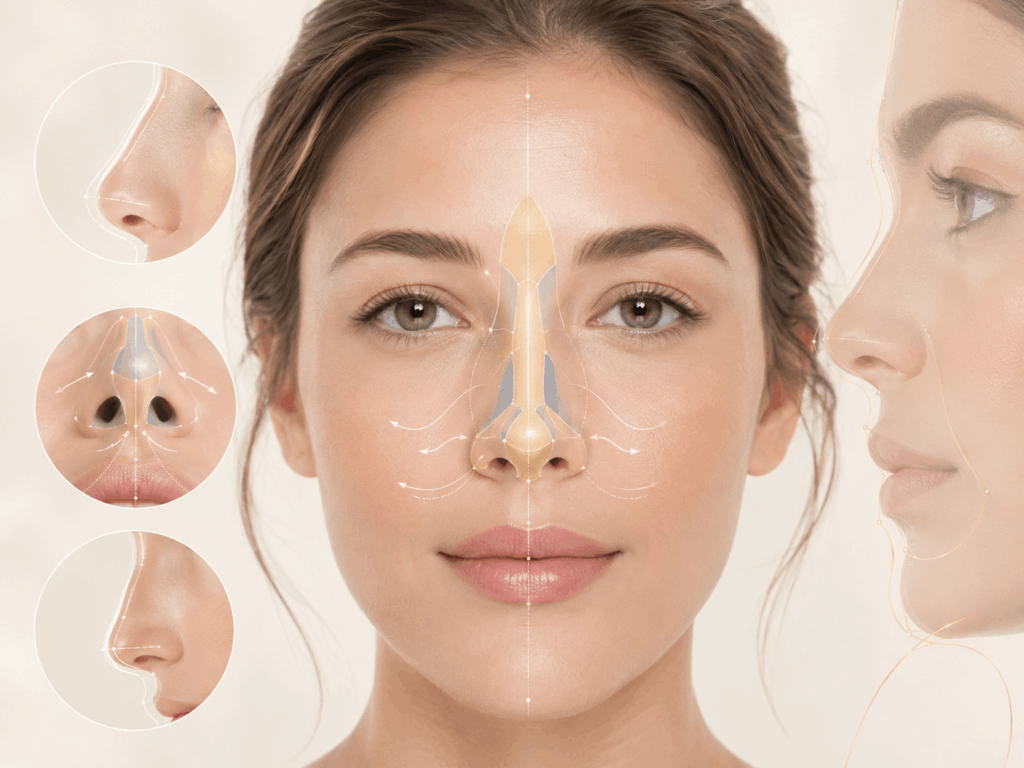
A deviated septum is another common example of this overlap. University Hospitals Sussex explains that the septum is the internal wall dividing the left and right sides of the nose, and when it bends to one or both sides it can lead to blockage. Cleveland Clinic likewise notes that septoplasty may help when a deviated septum is the cause of breathing difficulty, but also emphasizes that not every breathing problem is caused by a crooked septum. That is why a proper examination matters so much before surgery.
What “Better Breathing and Better Shape” Really Means
For patients considering rhinoplasty in Turkey, the phrase better breathing and better shape should not be understood as a simple package promise. It describes a surgical philosophy. The goal is not merely to make the nose smaller or more fashionable. The goal is to create a nose that looks harmonious with the face while preserving or improving the internal support systems that make comfortable breathing possible. Cleveland Clinic describes functional rhinoplasty as surgery that improves breathing and nasal function, while standard rhinoplasty can also address shape, size, and proportion.
In practical terms, this often means that a patient may need more than a cosmetic adjustment. A nose with a hump, crooked bridge, broad tip, or drooping tip may also require septal correction, valve support, or structural refinement. ENT Health notes that if breathing improves with nasal strips or splints, surgery involving the nasal tip, nasal valve, or rhinoplasty may help improve airflow. That is an important reminder that function often depends on support, not just on clearing space.
When Septorhinoplasty Becomes the Right Conversation
In many cases, the most relevant procedure is not cosmetic rhinoplasty alone but septorhinoplasty. NHS patient information explains that septorhinoplasty can be used when a patient has a blocked nose because of a bent septum and also wants a change in shape, or when changing the shape of the nose is necessary to help the septum sit centrally. Royal Berkshire NHS similarly describes septorhinoplasty as an operation that improves breathing through the nose while also changing appearance.
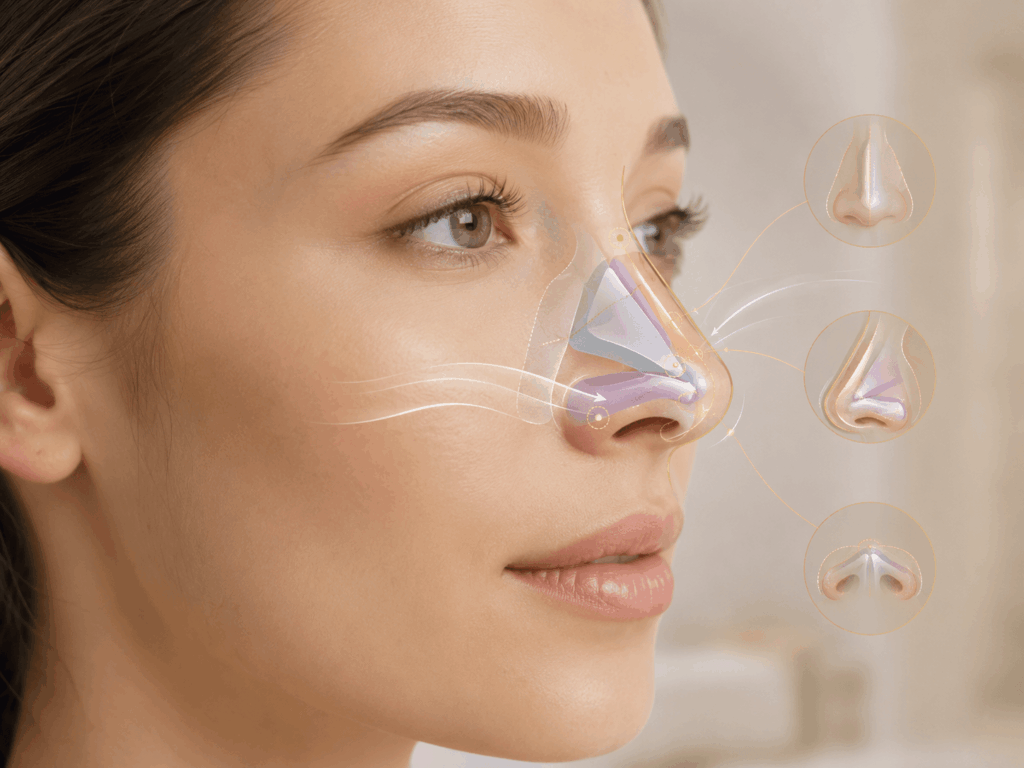
That distinction matters because it changes expectations. A patient who wants only a smaller bridge may still need internal work if the airway is narrow or unstable. Likewise, a patient who mainly complains about breathing may also benefit from changes to the external framework if the outer structure is contributing to obstruction. University Hospitals Sussex notes that septal surgery is sometimes combined with rhinoplasty involving the nasal bones at the top of the nose, which shows how internal and external correction can overlap in a single plan.
Why a Proper Evaluation Matters More Than the Keyword
The keyword rhinoplasty in Turkey for better breathing and better shape sounds straightforward, but the reality is highly individualized. Not every patient with breathing difficulty needs the same solution. Cleveland Clinic specifically notes that not every breathing issue involves a deviated septum, and ENT Health points out that turbinate enlargement, allergies, narrow nostrils, and nasal valve collapse can also contribute to obstruction. A successful consultation therefore has to identify the actual cause of symptoms rather than assume that one diagnosis explains everything.
This is one of the most important ideas for patients to understand. A technically attractive nose is not a true success if the airway becomes worse. At the same time, a purely functional correction that ignores facial balance may leave the patient dissatisfied with appearance. The best surgical planning begins with a thorough examination of the inside and outside of the nose, careful discussion of goals, and honest explanation of what can realistically be improved. NHS guidance also emphasizes that rhinoplasty is a complex operation and that patients should speak carefully with their surgeon about the procedure, qualifications, follow-up, and risks.
Natural Results Require Structural Thinking
One reason patients seek rhinoplasty in Turkey for better breathing and better shape is the desire for a natural result. Natural does not mean no visible improvement. It means the nose fits the face, works well, and avoids the overdone look that can happen when too much support is removed. Cleveland Clinic notes that rhinoplasty can make the nose smaller or bigger to create facial balance, while also opening blocked nasal passages. That phrasing is important because balance, not just reduction, is the real goal.
Structural thinking is especially important in noses that are crooked, weak, previously injured, or narrow internally. ENT Health explains that aging, weakened cartilage, and drooping of the tip can all contribute to nasal obstruction and that surgery may involve trimming, reshaping, or supporting the nasal and septal cartilage. In other words, better breathing and better shape often come from rebuilding or reinforcing support rather than simply taking tissue away.
Who May Benefit Most From This Kind of Surgery
Patients who may benefit from this combined approach often include those with a deviated septum, nasal valve collapse, a crooked nose after trauma, a visibly narrow or pinched nose, or long-standing dissatisfaction with both airflow and appearance. Cleveland Clinic notes that rhinoplasty can correct a bulbous, droopy, or deviated nose and open blocked passages, while septoplasty may be helpful when breathing problems are caused by septal deviation.
Still, surgery is not the answer to every complaint. ENT Health notes that allergies and turbinate enlargement may also contribute to nasal obstruction, which means some patients need medical treatment, allergy management, or a different kind of nasal surgery rather than cosmetic reshaping alone. This is why the best rhinoplasty planning does not begin with a template. It begins with diagnosis.
Recovery Expectations Need to Be Realistic
Patients researching rhinoplasty in Turkey for better breathing and better shape should also understand recovery honestly. NHS guidance states that rhinoplasty is usually performed under general anaesthetic, often takes about one and a half to three hours depending on the procedure, and can leave patients temporarily breathing through the mouth for about a week because of swelling and early healing changes. It is also common to experience soreness, swelling, bruising, and a stiff or numb feeling in the nose during recovery.
The early recovery period does not reflect the final result. NHS advice also recommends keeping the head elevated, avoiding blowing the nose, sneezing through the mouth to avoid pressure, and staying away from strenuous exercise or contact sports for several weeks. These details matter because a nose that is healing for both form and function needs time to settle. Better breathing may improve gradually as swelling decreases, just as shape refinement becomes clearer over time.
Why Surgeon Selection Is Central
Because rhinoplasty can permanently affect both appearance and breathing, surgeon selection matters enormously. NHS guidance warns that rhinoplasty is a complex operation and advises patients to ask about experience, qualifications, complication rates, and follow-up care before proceeding. Cleveland Clinic also notes that surgeons performing rhinoplasty are trained in plastic surgery or facial plastic surgery, and the institution highlights the value of specialists experienced in working inside the nose to fix breathing problems.
For patients, this means the right surgeon is not simply the one who offers the most dramatic before-and-after gallery. It is the one who understands airway function, facial balance, structural support, and realistic healing. The strongest consultation is often the one that explains not only what can be changed, but why those changes are appropriate for both airflow and facial harmony. That judgment is what turns a keyword into a genuinely successful procedure.
Final Thoughts on Rhinoplasty in Turkey for Better Breathing and Better Shape
Rhinoplasty in Turkey for better breathing and better shape is best understood as a dual-goal approach rather than a purely cosmetic one. Authoritative medical sources make clear that rhinoplasty can improve appearance, correct deformities, and open blocked nasal passages, while septoplasty or septorhinoplasty may be needed when internal structural problems such as a deviated septum are part of the picture. They also make equally clear that not every breathing problem comes from the same cause, which is why expert evaluation is essential.
The best outcomes come when the nose is treated as both a facial feature and an airway. A successful result should look natural, feel stable, and support comfortable breathing in daily life. For patients exploring this journey, the real question is not whether shape or function matters more. In advanced rhinoplasty, the strongest results are the ones where both improve together.
