






If you’re a man thinking about rhinoplasty, you probably do not want to look “done.” You want to look like yourself, just more balanced, more confident, maybe able to breathe better too. That’s the real goal. A good nose job for men should not erase character from the face. It should keep strength, proportion, and function intact while fixing what has bothered you for years.
That matters even more in Turkey, where rhinoplasty is one of the country’s most common surgical aesthetic procedures. In the latest ISAPS survey, Türkiye recorded 60,982 rhinoplasty procedures in 2024, making it the country’s top surgical cosmetic procedure by volume. Worldwide, ISAPS reported 1.1 million rhinoplasty procedures in 2023, up 21.6% from the year before.
This blog will walk you through what makes rhinoplasty for men different, who is a strong candidate, what recovery actually feels like, how nose job in Turkey pricing works, and how to avoid the biggest mistake male patients make: choosing a nose that looks technically smaller, but wrong for the rest of the face.
What is Nose Job for Men?
A nose job for men is a rhinoplasty designed to improve the nose without softening masculine facial features. In most cases, the aim is a straighter bridge, controlled tip refinement, better breathing, and a result that fits the jawline, brow, and overall facial balance rather than looking overly narrow or turned up.
Why a Nose Job for Men is Different from Standard Rhinoplasty
Male rhinoplasty is different because men usually need a different endpoint, not just a different starting point. The surgery is still rhinoplasty, but the planning changes.
Many clinic pages say the same basic thing: men want a stronger profile, straighter lines, and a natural look that does not read as feminine. That part is true. The better point, though, is why. A nose is never judged in isolation. On a male face, the nose has to work with a heavier brow, thicker skin in many patients, and often a stronger chin or broader midface. That is why an attractive result on a woman can look out of place on a man.
A useful detail here is the nasolabial angle, the angle between the base of the nose and the upper lip. One published review notes an “ideal” range of about 90° to 95° for men, compared with 95° to 110° for women. That does not mean every man should aim for one number. Faces are messier than that. But it does explain why overly rotating the tip can make a man rhinoplasty result look unnatural fast.
Imagine two patients with the same hump. One has a defined jaw and thick skin. The other has a softer chin and thinner skin. If both get the same “cute” lifted tip, one may look odd and the other may look completely off. Good surgeons do not copy-paste noses. They design balance.
Men Rhinoplasty Goals: Natural, Masculine, Functional
The best men rhinoplasty plans usually focus on restraint. That sounds simple. It isn’t.
In real consultations, male patients often ask for one or more of these changes:
- Remove a hump without making the bridge too scooped
- Refine a bulky tip without pinching it
- Straighten a crooked nose after trauma
- Improve breathing blocked by a deviated septum or internal valve issues
- Reduce overall size while keeping strength in profile
That last point is where many men get nervous. Fair enough. A lot of men are not chasing a “pretty” nose. They want a nose that stops dominating the face. Big difference.
This is also where function matters. The AAO-HNS clinical guideline on rhinoplasty emphasizes both nasal form and function, and specifically includes tools for evaluating nasal obstruction and patient satisfaction. In other words, breathing should be part of the plan, not an afterthought.
Here’s the thing: a man nose surgery result can look good in photos and still feel wrong if airflow is compromised. That is why good pre-op planning should cover more than aesthetics. Ask whether the surgeon evaluates septal deviation, valve collapse risk, prior nasal trauma, allergies, and sleep-related symptoms. If they talk only about shape, that is a red flag.
Who is a Good Candidate for a Men Nose Job?
A strong candidate for a men nose job is usually someone who has a specific concern, realistic expectations, and a clear reason for wanting surgery now, not “someday.”
That concern might be cosmetic, functional, or both. Common examples include a dorsal hump, post-traumatic crookedness, a bulbous tip, asymmetry, or chronic breathing difficulty. The official AAO-HNS guideline is written for patients 15 years and older, but the right age for surgery depends on physical maturity, emotional maturity, and the exact problem being treated.
Globally, rhinoplasty skews younger than many cosmetic procedures. ISAPS reports that about 60.1% of rhinoplasty patients worldwide in 2024 were 18 to 34 years old, while 29.0% were 35 to 50. That lines up with what many clinics see in practice: men often seek surgery when appearance starts affecting confidence, dating, social life, or work-facing roles, or when an old sports injury finally becomes impossible to ignore.
But candidacy is not just anatomy and age. It is mindset. If you are hoping surgery will solve every confidence issue in your life, pause. Rhinoplasty can be powerful. It is not magic. The right patient usually says something like, “I’ve thought about this for years, I know exactly what bothers me, and I want improvement, not a different identity.”
What to expect from rhinoplasty for men in Turkey
Turkey has become a major destination for rhinoplasty because volume, surgeon experience, and medical tourism infrastructure all intersect there. According to the 2024 ISAPS survey, Türkiye recorded 570,478 surgical aesthetic procedures overall and 60,982 rhinoplasties, making rhinoplasty the country’s most common surgical cosmetic procedure.
That volume matters. High-volume markets often create more specialist experience, especially in complex nasal work. Still, volume alone should not impress you too much. Plenty of patients get dazzled by before-and-after grids and package deals, then forget to ask the boring questions that actually matter:
- Who will perform the surgery?
- In which hospital?
- What happens if your breathing worsens?
- Who sees you after you fly home?
- How often the surgeon operates on male noses specifically
- Whether they show healed results from multiple angles, not just day-7 photos
- Whether they discuss thick skin, trauma, or revision risk honestly
- How they handle functional complaints and long-term follow-up
If you are considering a turkey nose job, ask for examples that look like men, not softened Instagram faces. A surgeon who understands male aesthetics should be able to explain why a certain bridge height, width, and tip position fits your face in plain language.
Open vs Closed Men Rhinoplasty
This is where patients often get distracted by technique. Open and closed approaches both have a place. Technique matters, but judgment matters more.
Closed rhinoplasty may reduce visible external scarring and can work well in selected cases. Open rhinoplasty offers broader exposure, which can help in more complex anatomy, trauma cases, asymmetry, major tip work, or revision surgery. A good surgeon should explain why they recommend one approach for your nose, not pitch one method as universally superior.
Nose Job in Turkey Cost: What Male Patients Should Actually Compare
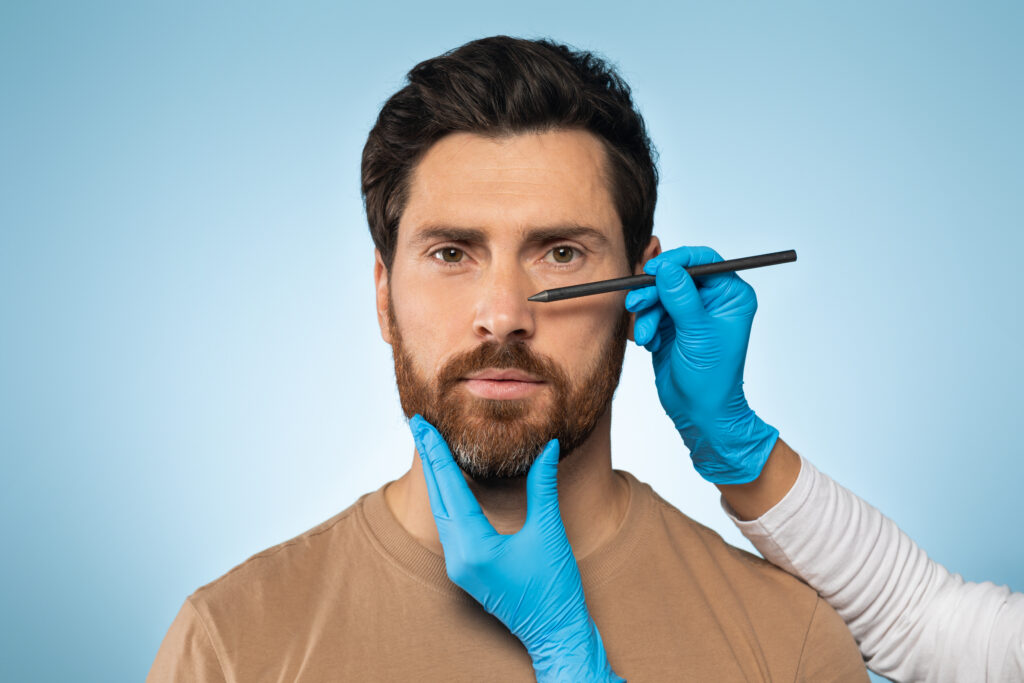
Let’s be honest. Cost is one reason many international patients look at Turkey. It just should not be the only reason.
Published clinic pricing varies, but some Turkish rhinoplasty pages currently list starting prices around €5,000, while other all-inclusive style pages cite ranges around €5,000 to €7,000 depending on complexity and what is included. These are examples, not market guarantees. Actual quotes vary based on surgeon experience, hospital fees, whether septal work is included, and whether you need primary or revision surgery.
A smart comparison for a nose job in Turkey is not just “What’s the cheapest quote?” It is:
- Surgeon expertise with male noses
- Hospital accreditation and anesthesia standards
- What pre-op imaging, bloodwork, and medications are included
- Whether hotel, transfers, or interpreter support are bundled
- How many in-person follow-ups happen before you fly home
- What revision policy exists, if any
- How remote aftercare works once you are back home
Imagine you save money upfront, then struggle with prolonged swelling, poor communication, or unanswered breathing concerns after you leave. That cheap deal gets expensive fast.
| Factor | Low-prIce package | HIgh-value package |
|---|---|---|
| Surgeon access | Limited, mostly coordinator-led | Direct surgeon consultation |
| Functional assessment | Cosmetic focus only | Cosmetic + breathing review |
| Hospital quality | Unclear | Clearly stated |
| Aftercare | Minimal | Structured follow-up |
| Male case portfolio | Generic | Specific healed male results |
| Revision policy | Vague | Written and explained |
Note: To know more about nose job Turkey costs, check out our dedicated blog post.
Man Nose Surgery Recovery: What it Really Feels Like
Recovery is usually less dramatic than people fear, but slower than many expect.
According to the AAO-HNS patient FAQ, bruising after rhinoplasty may take about 7 to 10 days to resolve, swelling can last for several weeks, congestion may take weeks to improve, and contact sports may be off-limits for several weeks or months depending on healing and surgeon clearance.
That means the first week is about looking rougher than you feel. You may feel congested, puffy, tired, and impatient. Then the cast comes off and many patients get a weird emotional mix: relief, excitement, and immediate overanalysis. The nose is not “done” at that point. Not even close.
For male patients, especially those with thicker skin, tip definition can take longer to reveal itself. This is one reason I would never judge a man rhinoplasty result by early social-media photos. Day 7 is content. It is not the final outcome.
A practical timeline looks something like this:
- Days 1 to 3: swelling, congestion, low energy
- Days 7 to 10: bruising often improves, splint may come off
- Weeks 2 to 6: you look more socially normal, but still swollen
- Months 3 to 12: refinement continues, especially in the tip
And yes, flying home matters. International patients typically need a stay long enough for immediate checks and splint removal. Your clinic should spell out this schedule clearly before you book.
How to Choose The Right Surgeon for a Nose Job for Men
This is the decision that shapes everything else.
A surgeon may be excellent at rhinoplasty and still not be your surgeon. That is especially true if your goal is a subtle nose job for men that keeps masculine identity intact. You want someone who understands reduction without feminization, refinement without pinching, and correction without overpromising symmetry.
Start with the portfolio. Ask for healed male cases with:
- Front, oblique, and profile views
- Noses similar to yours in thickness and size
- Trauma or crooked-nose cases if that is your issue
- At least several months of healing, not just immediate post-op shots
Then listen to the consultation. Do they explain tradeoffs? Do they tell you what not to do? Good surgeons often talk you out of excess. That is usually a very good sign.
You should also ask about revision rates and policies, even though the AAO-HNS patient FAQ notes only that a low percentage of patients need additional surgery and that the number varies. A careful surgeon will not dodge that conversation.
One more point that deserves more attention than it gets: if you have breathing problems now, get that documented before surgery.
The Most common Mistake Men Make Before a Turkey Nose Job

They focus too much on size and not enough on harmony.
A lot of men walk into consultations saying, “I just want it smaller.” But smaller is not the same as better. A nose can be reduced and still look heavy, pinched, crooked, or strangely disconnected from the face. Worse, aggressive reduction can weaken support and create breathing problems over time.
The better goal for a man nose job is usually this: less distracting, more proportionate, fully believable. You should still look like you. Just not like the nose enters the room before you do.
That is also why I would treat overly filtered before-and-after photos with caution. Male rhinoplasty is one of those procedures where “natural” is easy to promise and hard to execute. The best results often look almost boring at first glance. Then you realize why they work. Nothing screams surgery.
Final Thoughts
A successful nose job for men is not about chasing a trendy nose. It is about creating a nose that fits your face, supports breathing, and still looks unmistakably male. In Turkey, you can find experienced surgeons and strong value, but the right choice comes from careful comparison, not flashy marketing.
Take your time. Study healed male results. Ask harder questions than the clinic expects. Then move forward only when the plan feels specific, balanced, and honest. That is how you give yourself the best chance of getting the natural, masculine result you actually want.
FREQUENTLY ASKED QUESTIONS
Is rhinoplasty for men more difficult than rhinoplasty for women?
In many cases, yes, it can be more technically demanding because male patients often want improvement without obvious softening. Thicker skin, trauma history, stronger facial features, and the need to preserve a straighter bridge or less-rotated tip can narrow the margin for error. The surgery is not “harder” in every case, but the aesthetic target is often less forgiving.
How long should I stay in Turkey after a man nose surgery?
Most international patients plan to remain in Turkey long enough for early post-op checks and splint removal, often around a week or a bit longer depending on the clinic and the procedure. The AAO-HNS patient FAQ notes that bruising may take about 7 to 10 days to settle, which lines up with why short-stay planning can be risky.
Will a nose job for men affect breathing?
It can improve breathing, worsen it, or leave it unchanged depending on your anatomy and the surgical plan. That is why functional assessment matters before surgery.
How much does a nose job in Turkey usually cost for men?
Pricing varies widely. Published clinic pages commonly show starting points around €5,000 and some list packaged ranges around €5,000 to €7,000, but those numbers are not universal and may or may not include hospital fees, accommodation, transfers, or septal work. Use them as rough reference points, not final answers.
What makes a male rhinoplasty result look natural?
Usually, it comes down to proportion and restraint: a straighter bridge, a tip that is refined but not over-rotated, preserved width where the face needs it, and a result that matches the jaw, brow, and cheeks. A natural male result should not make people think “new nose.” It should make them think you look better rested, stronger, or more balanced.
Is a turkey nose job worth it for international patients?
It can be, especially if you value surgeon experience and structured medical travel support. Türkiye recorded more than 60,000 rhinoplasties in 2024, which reflects both expertise concentration and demand. But value only holds if you choose based on surgeon fit, safety standards, and aftercare, not just headline price.
