






Most rhinoplasty patients spend hours researching nose shapes, surgeons, and before-and-after galleries. Fewer spend ten minutes understanding how their nose is actually being measured and evaluated before the surgeon picks up a scalpel.
How a surgeon analyses your nose before your rhinoplasty, whether they’re using flat photographs, a 3D surface scan, or computed tomography, shapes everything that comes after: the surgical plan, the communication between you and your surgeon, and ultimately the result you see when the swelling goes down.
Both 2D nose analysis and 3D nose analysis are used in rhinoplasty planning today. They’re not opposites, and one isn’t automatically superior to the other. But understanding what each method measures, what each is good for, and why the most advanced clinics in Turkey are increasingly moving beyond flat photographs matters enormously if you’re trying to make an informed decision about your surgery.
This blog breaks all of it down, including what the peer-reviewed research actually says, which may surprise you.
Contents
- 1 What is The Difference Between 2D and 3D Nose Analysis in Rhinoplasty?
- 2 Why Nasal Analysis Matters More Than Most Patients Realise
- 3 What 2D Nose Analysis Actually Measures
- 4 The Limits of the Flat Image: What 2D Analysis Cannot Tell You
- 5 What 3D Nose Analysis Actually Looks Like in Practice
- 6 The 7 Nose Types and What 3D Measurements Reveal About Each
- 7 Why This Matters Specifically for Rhinoplasty in Turkey
- 8 2D vs 3D: When Does Each Approach Serve You Best?
- 9 What This Means When You Walk Into a Consultation
- 10 Questions to Ask Your Clinic About Nasal Analysis
- 11 Conclusion
- 12 Frequently Asked Questions
- 12.1 Is 3D nose analysis necessary for rhinoplasty, or will 2D photos be enough?
- 12.2 What does a rhinoplasty consultation nasal analysis include?
- 12.3 How does 3D imaging help with my rhinoplasty in Turkey?
- 12.4 Can a surgeon tell the difference between nose types using only photographs?
- 12.5 What is the difference between a 3D scan and CT imaging for rhinoplasty planning?
- 12.6 How do I know if the rhinoplasty clinic in Turkey I’m considering does proper nasal analysis?
What is The Difference Between 2D and 3D Nose Analysis in Rhinoplasty?
2D nose analysis uses standard photographs to measure nasal angles, proportions, and distances from a flat image. 3D nose analysis uses surface laser scanning or CT imaging to capture the nose’s actual shape, volume, and surface area in three dimensions. Both can measure key nasal parameters accurately, but 3D imaging provides spatial data and volume measurements that photographs cannot capture at all.
Why Nasal Analysis Matters More Than Most Patients Realise
Before any rhinoplasty, whether a primary nose job or a revision, your surgeon needs to map the nose methodically. Not in terms of “I think the tip looks a little low,” but in objective, measurable terms: the nasofrontal angle, tip rotation, dorsal length, nasal index, alar base width, symmetry of the dorsal aesthetic lines.
This is called systematic nasal analysis, and it’s the foundation every surgical plan is built on.
Think of it this way. A builder doesn’t start laying bricks by eyeballing the plot and guessing dimensions. They use measurements, schematics, reference points. Rhinoplasty, which involves reshaping bone, cartilage, and soft tissue in a space the size of your thumb, deserves at least the same rigour.
The historical standard has been the 2D photograph, a standardised image taken from the front, side, and base, analysed with calibrated software to extract angles and proportions. It works, has decades of validated clinical use behind it, and remains the most widely available method in clinics worldwide.
The newer frontier is 3D imaging, surface laser scanning, stereophotogrammetry, or CT-derived models, which adds a dimension the photograph can’t access: real spatial depth, surface area, and volume.
What 2D Nose Analysis Actually Measures
Standard 2D nasal analysis, most commonly following the Dallas Rhinoplasty framework developed by Rohrich and colleagues, the dominant international systematic approach, evaluates a defined set of parameters from calibrated photographs:
- Nasofrontal angle: The angle where the forehead meets the nose at the bridge
- Tip rotation angle: How far the nasal tip points upward or downward
- Nasal dorsum length and index: The length of the bridge and its proportion to overall nasal height
- Alar base width: The distance between the outer edges of the nostrils
- Dorsal aesthetic lines: The two parallel curves visible down the nasal bridge from a frontal view
- Columellar and alar rim relationships: How the bottom of the nose and nostril edges relate to each other
- Tip projection: How far the tip extends from the face
A 2023 prospective study published in the Indian Journal of Plastic Surgery by Rendón-Medina and colleagues evaluated all of these parameters across 42 patients using three different methods simultaneously: standard photographs, 3D surface laser imaging using the Microsoft Kinect system, and 3D CT scan imaging. The researchers compared whether the three methods gave statistically different readings for the same nasal features.
Their finding was striking. For nasofrontal angle and tip rotation angle, all three methods produced results with a statistical equivalence of p = 1 — meaning no measurable difference whatsoever between the photograph, the 3D laser scan, and the CT scan for these critical measurements. For the nasal dorsum length index, the difference was also non-significant at p = 0.32.
In plain terms: a well-taken photograph can measure key rhinoplasty angles just as accurately as expensive imaging equipment.
That’s an important finding for patients, particularly those asking whether a clinic’s lack of 3D scanning equipment disqualifies them. For angular and proportional analysis, it doesn’t necessarily.
The Limits of the Flat Image: What 2D Analysis Cannot Tell You
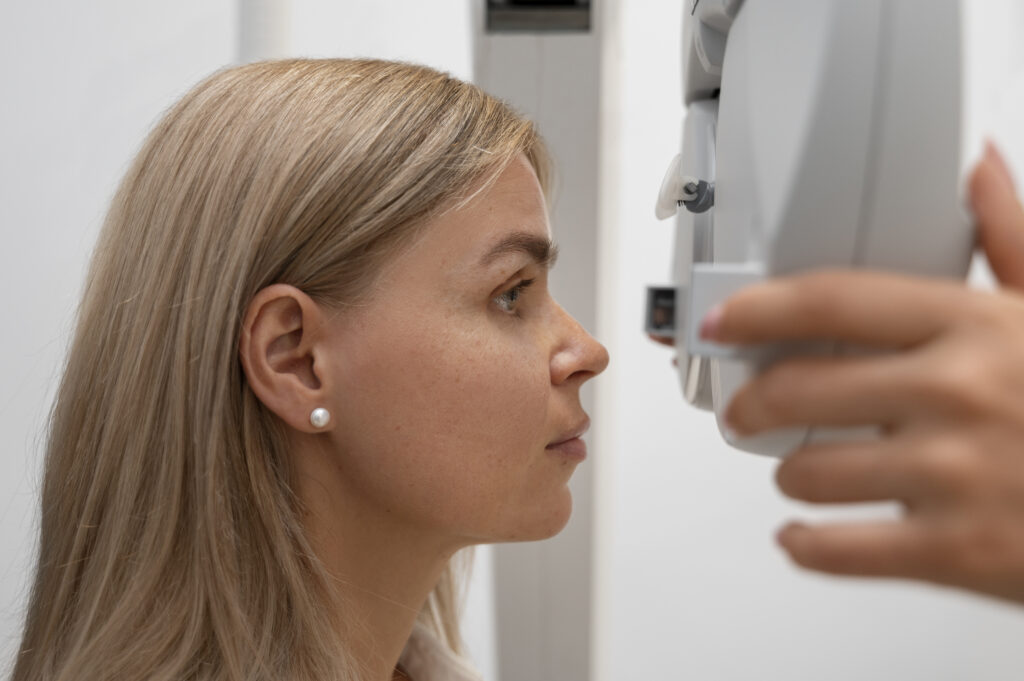
Here’s the honest tension in that finding, though. The Rendón-Medina study confirmed that 2D and 3D methods agree on angles and proportions. But rhinoplasty doesn’t only involve angles and proportions.
The nose exists in three dimensions. A dorsal hump isn’t just an angle deviation, it has volume. A bulbous tip isn’t just wider in a photo, it has a surface area and a projection into space that a flat image flattens and, by definition, loses.
This is precisely the problem a 2023 study published in the Journal of Plastic, Reconstructive & Aesthetic Surgery set out to address. Dr M. Mazhar Celikoyar from Demiroğlu Bilim University School of Medicine in Istanbul, working with colleagues at Florida Polytechnic University, developed and tested a new framework for 3D area and volume measurements applied to seven different nose types, ranging from snub and flat to hooked and saddle.
The results demonstrated something that photographs simply cannot quantify.
A snub nose, when compared against a reference pleasant nose, showed a 43.3% reduction in nasal tip surface area, measurable only in three dimensions. A hooked nose registered the highest dorsal hump values in both surface area and volume measurements. A saddle nose showed the greatest radix (nasal root) volume. These aren’t just visual impressions. They’re objective, repeatable, quantified differences, the kind of data a surgeon can use to plan a precise intervention and evaluate an objective outcome.
As Dr Celikoyar and colleagues concluded, 3D measurements “will enrich the facial analysis and evaluation of the outcomes of rhinoplasty” in ways that 2D analysis fundamentally cannot achieve alone.
This is the distinction that matters for patients: 2D analysis is accurate for measuring angles and ratios. 3D imaging is necessary for understanding volume, surface area, and the true spatial character of the nose.
What 3D Nose Analysis Actually Looks Like in Practice
There’s a wide spectrum of what “3D imaging” means in a clinical setting, and the variation matters.
Surface Laser Scanning
The most accessible form of clinical 3D imaging uses infrared light or structured light to capture a point-cloud map of the face’s surface. Consumer-grade versions, like the Microsoft Kinect system used in the Rendón-Medina study, can produce a full facial scan in roughly 60 seconds and cost a fraction of professional systems. High-end dedicated scanners like the Canfield Vectra H2 are widely used in leading rhinoplasty clinics globally and in Turkey.
Surface scanning captures the external shape of the nose in three dimensions, useful for planning the external result, simulating morphological changes, and measuring surface area. It does not show bone or cartilage directly.
Computed Tomography (CT) Imaging
CT scan imaging produces a full three-dimensional model from stacked cross-sectional slices, allowing surgeons to see bone, cartilage, and soft tissue simultaneously. For complex revision cases, preservation rhinoplasty, or patients with structural deformities, CT imaging provides information that no surface scan can replicate.
The tradeoff: cost, radiation exposure, and the need for dedicated hospital equipment. CT is not standard for straightforward primary rhinoplasty, but it’s indispensable for certain complex cases, particularly where the surgeon needs to map the precise relationship between the osseocartilaginous framework and the skin envelope before making a single incision.
3D Morphing Software: The Consultation Tool
Separate from imaging hardware is morphing software, programs that take a 3D model of the patient’s face and allow the surgeon to simulate changes in real time during the consultation. Systems like Crisalix, Canfield Vectra, and open-source web tools allow both surgeon and patient to see proposed changes to tip projection, bridge height, alar base width, and tip rotation as visual simulations before surgery begins.
Morphing software allows the surgeon to precisely explain planned changes to patients, and to postpone or even cancel surgery for patients who do not appear satisfied with proposed changes. That’s not a minor benefit, it’s one of the most important functions of pre-surgical imaging in managing expectations.
A 2024 Turkish study by Selamioğlu and colleagues surveyed 146 rhinoplasty patients and found that 88.4% of patients reported that 3D imaging influenced their decision to proceed with surgery, a striking figure that illustrates how significantly imaging affects patient confidence and commitment. Performing surgical planning in 3D can make surgeons more efficient, surgery safer, and anaesthesia shorter.
The 7 Nose Types and What 3D Measurements Reveal About Each
One of the most practically useful elements of the Celikoyar et al. study is its systematic analysis of seven distinct nose deformity types, each representing a common clinical presentation that rhinoplasty surgeons encounter. Here’s what 3D area and volume measurements showed for each, translated into patient-relevant terms.
| Nose Type | Key 3D Fındıng | What It Means for Surgery |
|---|---|---|
| Snub | 43.3% tip area reduction vs. reference | Significant tip reconstruction required; 3D guides volume restoration |
| Hooked (dorsal hump) | Highest dorsal hump area & volume | Hump is larger than photos suggest; 3D prevents under-reduction |
| Short | Major tip and dorsum differences | Multi-zone reconstruction; complex planning needed |
| Pointy | Large tip volume, small tip area | Narrow but projectile, a discordance only 3D can detect |
| Flat | Significant tip and dorsum projection loss | Under-projection quantified; guides graft volume decisions |
| Large | Greatest nasal root differences | Root augmentation or reduction planned with precision |
| Saddle | Highest radix area and volume | Structural support requirement mapped before surgery |
Notice the pointy nose finding, its tip volume is large, but its tip surface area is smaller than the reference nose. In a 2D photograph, this discordance is invisible. A surgeon relying on 2D measurements alone might misread a pointy nose as having a tip that’s simply too projected, when in fact its three-dimensional character is considerably more nuanced.
This is the kind of insight that only 3D analysis provides, and it’s why best rhinoplasty surgeons in Turkey now use 3D imaging not to replace their clinical judgment but to refine and verify it.
Why This Matters Specifically for Rhinoplasty in Turkey

Turkey, and Istanbul in particular, has become one of the world’s most active rhinoplasty markets, attracting patients from across Europe, the Middle East, and beyond for both primary and revision procedures.
One reason the country’s leading clinics have invested heavily in 3D imaging technology is the unique challenge of medical tourism itself. The majority of international patients cannot attend multiple in-person consultations over weeks or months, as domestic patients typically can. A single consultation must accomplish what might take three or four sessions in a local setting: full nasal analysis, goal-setting, expectation management, surgical planning, and patient education.
3D imaging in medical tourism rhinoplasty facilitates virtual consultations and detailed preoperative planning for international patients, broadening access to culturally sensitive rhinoplasty care worldwide. For a patient flying into Istanbul from London, Berlin, or Dubai, a detailed 3D model of their face can be shared digitally, analysed remotely before arrival, and ready to discuss the moment they walk into the clinic.
The research underpinning the 3D measurement frameworks being adopted globally includes Turkish-led work. The Celikoyar et al. study, based at Demiroğlu Bilim University’s Department of Otolaryngology in Istanbul, is a direct contribution to the foundational science of how 3D analysis is being built into modern rhinoplasty planning. When an Istanbul clinic tells you they use 3D imaging, that’s not just a sales pitch. There’s genuine scientific development behind it.
Ethnic nasal anatomy matters here too. The Rendón-Medina study found that the population studied had characteristics of the Hispanic mestizo nose, a specific pattern including thick skin (72%), hanging columella (86%), lack of tip projection (86%), and wide alar base (57%). Turkish patients, and patients from the Middle East and Central Asia who frequently travel to Turkey for rhinoplasty, similarly show distinctive nasal anatomical patterns that differ from Western European norms on which many standard rhinoplasty references are based.
3D imaging, precisely because it measures the individual nose rather than comparing it to a population average, is better positioned to handle this variation. Your nose’s actual surface area and volume, not a theoretical ideal, becomes the baseline.
2D vs 3D: When Does Each Approach Serve You Best?
Patients sometimes assume that a clinic offering 3D analysis is simply more advanced, full stop. That’s an oversimplification. The Rendón-Medina evidence tells us that for angular and proportional analysis, 2D photographs in expert hands remain clinically valid. The technology isn’t the variable, the expertise is.
What 3D analysis adds isn’t a correction of 2D failures. It’s an expansion of what’s measurable at all.
| Clınıcal Use | 2D Photography | 3D Surface Scan | CT Imagıng |
|---|---|---|---|
| Nasofrontal angle | ✅ Accurate | ✅ Accurate | ✅ Accurate |
| Tip rotation angle | ✅ Accurate | ✅ Accurate | ✅ Accurate |
| Surface area measurements | ❌ Not possible | ✅ Yes | ✅ Yes |
| Volume measurements | ❌ Not possible | ✅ Yes | ✅ Yes |
| Bone structure visualisation | ❌ Not visible | ❌ Not visible | ✅ Yes |
| Pre-surgery simulation/morphing | ✅ Limited (2D morph) | ✅ Interactive 3D morph | ❌ Not standard |
| Cost and accessibility | ✅ Low / universal | Moderate | ❌ High / hospital setting |
| Radiation exposure | None | None | Moderate |
| Best for | Most primary rhinoplasties | Planning, simulation, complex cases | Revision, preservation rhinoplasty, structural assessment |
The honest answer is that a sophisticated rhinoplasty consultation uses both, photographs as the reliable baseline for angular analysis and documentation, and 3D imaging for visualisation, simulation, volume assessment, and patient communication.
For patients considering rhinoplasty in Turkey, the question to ask isn’t “do they have 3D imaging?” It’s “how do they use their imaging tools, and what does the analysis show about my specific nose?”
What This Means When You Walk Into a Consultation
Imagine you’ve flown into Istanbul for your rhinoplasty consultation. You’ve done your research. You have reference photos. You know roughly what you want.
The surgeon takes your photographs. Loads them into the analysis software. And then pulls up a 3D model of your face.
Here’s what should be happening in that room, and what you can now understand:
The photographs are being measured against a systematic nasal analysis framework, nasofrontal angle, tip rotation, dorsal index, alar base, projection. This gives the surgeon a clinical baseline in objective numbers, not impressions.
The 3D model is being used to assess volume and surface area, particularly relevant if you have a dorsal hump (its true volume is greater than a photograph suggests), tip issues (projection and area can diverge), or concerns about symmetry (3D captures lateral asymmetry that forward-facing photographs compress into a single plane).
The morphing simulation is a communication tool, the surgeon shows you proposed changes, you respond, goals are aligned or recalibrated. This part of the consultation allows the surgeon and patient to reach a mutually agreeable set of expectations by demonstrating the planned outcome and describing the objectives of surgery.
None of this works without clinical judgment behind it. Regardless of how advanced the technology is, achieving optimal results depends on the surgeon’s skill, knowledge, and aesthetic judgment. Surgeons use 3D imaging as a roadmap but adapt their approach during surgery based on real-time observations.
The imaging is the map. The surgeon’s expertise navigates it.
Questions to Ask Your Clinic About Nasal Analysis
You now know enough to have a real conversation about this. These questions will tell you quickly whether a clinic is doing thorough pre-surgical analysis or going through the motions.
“Which nasal analysis framework do you use?”
You want to hear a named, systematic approach, Dallas Rhinoplasty system, or a comparable peer-reviewed framework. “We look at your nose carefully” is not an answer.
“Do you perform 3D imaging, and which system do you use?”
Common professional systems include Canfield Vectra, Crisalix, and 3dMD. The Kinect-based system used in the Rendón-Medina study is a low-cost but validated option. Ask what the system measures and how those measurements inform the surgical plan.
“What does my nasal analysis show specifically, angles, proportions, and any volume concerns?”
A surgeon who can speak to your individual measurements, not just show you before-and-afters, is engaged with your specific anatomy.
“Will I be able to see a morphing simulation before confirming surgery?”
This is standard at most reputable rhinoplasty clinics in Istanbul. If a clinic doesn’t offer simulation, ask why.
“How are post-operative results documented and compared to pre-surgical measurements?”
The best clinics use the same imaging system pre- and post-operatively to provide objective evidence of what changed, not just photographs.
Conclusion
Here’s what the science actually tells us: 2D and 3D nose analysis are not competitors. They’re complementary tools that serve different purposes in the same workflow.
Standard photographs, properly taken and systematically analysed, measure angles and proportions just as accurately as 3D surface scans and CT imaging, peer-reviewed evidence confirms this. But the moment your surgical planning requires understanding the surface area of a dorsal hump, the volume of a nasal tip, or the true three-dimensional character of an asymmetry, only 3D analysis delivers.
Turkey’s leading rhinoplasty centres, some of which have contributed directly to the published research on 3D nasal measurement, are integrating both approaches as standard. Not because it’s a marketing advantage, but because the science supports it.
If you’re considering rhinoplasty in Turkey, ask to see your nasal analysis. Ask what the measurements show. Ask how the imaging will guide your surgery. A clinic that welcomes those questions, and answers them with specifics, is one that’s treating your nose the way the evidence says it should be treated.
Frequently Asked Questions
Is 3D nose analysis necessary for rhinoplasty, or will 2D photos be enough?
For measuring critical angles like nasofrontal angle and tip rotation, peer-reviewed research confirms that well-taken 2D photographs are statistically as accurate as 3D scanning or CT imaging. However, 3D imaging is needed for surface area and volume measurements, pre-surgery morphing simulations, and full spatial assessment, particularly for complex cases. Most reputable rhinoplasty clinics in Turkey now use both as complementary tools.
What does a rhinoplasty consultation nasal analysis include?
A thorough systematic nasal analysis covers nasofrontal angle, tip rotation and projection, nasal dorsum length and index, alar base width, dorsal aesthetic line symmetry, columellar and alar rim relationships, skin thickness, and overall facial proportions. Advanced consultations add 3D surface area and volume measurements of the tip, dorsal hump, radix, and alar base, measurements only 3D imaging can provide.
How does 3D imaging help with my rhinoplasty in Turkey?
For international patients, 3D imaging allows virtual consultation sharing before travel, detailed pre-surgical planning that compresses what might be several local appointments into one, and an objective record of what surgery has achieved. It also enables morphing simulations, showing proposed changes on your own face, which research suggests influence the decision to proceed with surgery in the majority of patients.
Can a surgeon tell the difference between nose types using only photographs?
An experienced surgeon can identify nose types visually from photographs. However, 3D analysis reveals quantitative differences that photographs cannot, for instance, a snub nose showing a 43.3% reduction in tip surface area compared to a reference nose, or a pointy nose having a large tip volume but small tip surface area. These discordances are invisible in 2D and can affect surgical planning.
What is the difference between a 3D scan and CT imaging for rhinoplasty planning?
A 3D surface scan captures the external shape and surface of the nose, useful for morphing, simulation, and external measurement. CT imaging captures bone, cartilage, and soft tissue in three dimensions, providing internal structural information a surface scan cannot show. CT is generally reserved for complex revision surgery, preservation rhinoplasty, or patients with structural deformities where internal anatomy must be mapped precisely before surgery.
How do I know if the rhinoplasty clinic in Turkey I’m considering does proper nasal analysis?
Ask specifically which systematic nasal analysis framework they use, whether they offer 3D imaging or morphing simulation, and whether they can show you your own measurements before confirming surgery. A clinic that answers these questions in detail, with specifics about angles, proportions, and imaging tools, is demonstrating clinical rigour. Vague answers or a focus solely on before-and-after galleries are yellow flags.
