





The nostril margins play an important role in the appearance, support and function of the lower third of the nose. When one or both nostril rims sit too high, the nostrils may look overly visible from the front or side. This condition is known as alar retraction.
Some patients naturally have elevated nostril rims. In other cases, a retracted nostril develops after rhinoplasty because too much cartilage was removed, the nasal tip was repositioned without adequate support, or scar tissue pulled the nostril margin upward during healing.
For patients researching revision rhinoplasty in Turkey, correcting alar retraction requires more than lowering the visible edge of the nostril. The surgeon must identify whether the problem involves cartilage, skin, internal lining, scar tissue, tip position or a combination of these factors.
This guide explains the causes of alar retraction, how it is evaluated and which surgical techniques may be considered to restore a more natural nostril contour.
What Is Alar Retraction?
The alae are the soft outer walls of the nostrils. The lower border of each ala is known as the alar rim.
Alar retraction occurs when the rim is positioned higher than expected, exposing more of the nostril opening. From the side, the nostril may look excessively arched. From the front, the patient may feel that too much of the inside of the nose is visible.
The condition can affect one side or both sides. Bilateral retraction may create a pinched or operated appearance, while one-sided retraction may make the nose look noticeably asymmetrical.
Alar retraction is considered a complex nasal deformity because its causes and severity vary considerably between patients. It may be congenital, develop after trauma or appear following a previous rhinoplasty.
What Does a Retracted Nostril After Rhinoplasty Look Like?
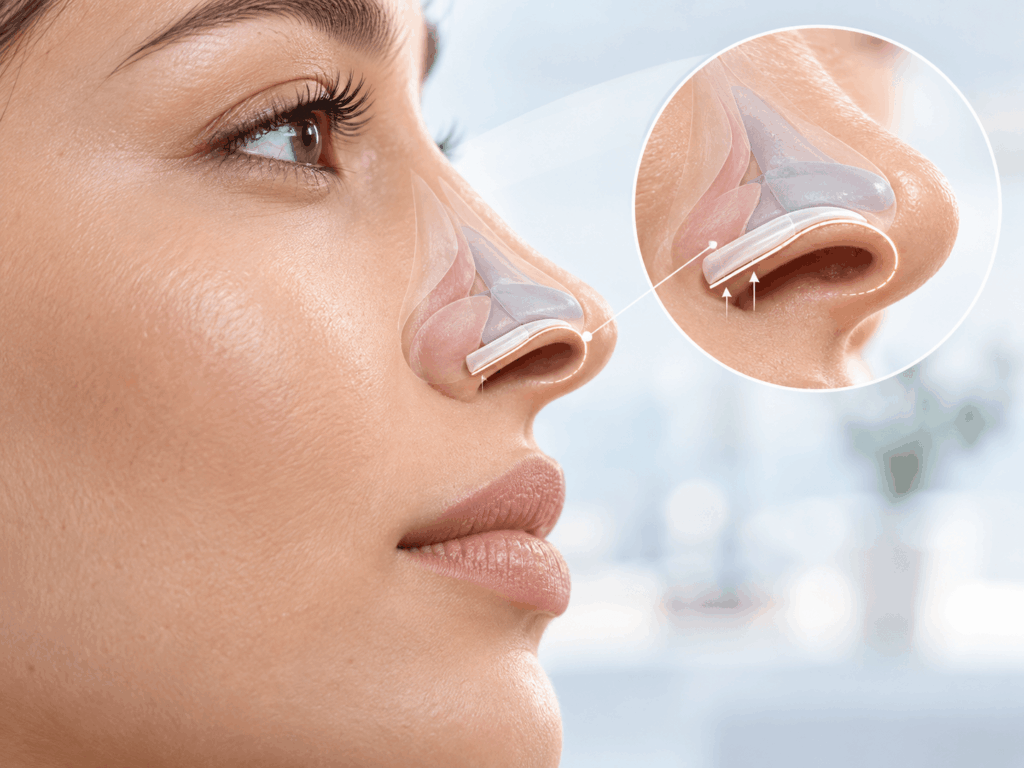
A retracted nostril after rhinoplasty may present in several ways. Common visible concerns include:
- Excessive nostril visibility from the front
- A high or sharply curved nostril rim
- Uneven nostril height
- A triangular nostril shape
- A pinched appearance
- Increased columellar show
- An unnatural transition between the tip and nostril
- Different nostril shapes on the right and left sides
Some patients notice the problem immediately after their cast is removed. In many cases, however, swelling makes the nostril shape difficult to assess during early recovery.
As swelling decreases and scar tissue contracts, the alar rim may gradually move upward or become more visibly uneven. This means the final appearance should not usually be judged during the first weeks or months after surgery.
What Causes Alar Retraction After Nose Surgery?
Alar retraction can result from several structural and soft-tissue problems. More than one factor may be responsible in complex revision cases.
Excessive Removal of Lower Lateral Cartilage
The lower lateral cartilages help shape and support the nasal tip and nostril margins.
During rhinoplasty, part of the upper edge of this cartilage may be reduced to refine a wide or bulbous nasal tip. If too much cartilage is removed, the remaining structure may no longer provide adequate support to the alar rim.
The weakened nostril margin can then pull upward during healing.
Medical literature identifies excessive removal of the cephalic portion of the lower lateral cartilage as an important cause of postoperative alar retraction. Alar contour grafts may be used to restore support in suitable cases.
Incorrect Position of the Lower Lateral Cartilage
Some patients naturally have lower lateral cartilages that sit too high or point in an unfavourable direction.
Previous surgery may also have changed their position. If the lateral cartilage is rotated, shortened or pulled upward, the nostril margin may follow it.
In these cases, simply placing a small graft beneath the rim may not be enough. The existing cartilage may need to be released, repositioned or reconstructed.
Excessive Nasal Tip Rotation
Rotating the nasal tip upward can improve a drooping nose when performed appropriately.
However, excessive tip rotation may increase nostril visibility and make the alar rims appear retracted. The nose may look short, over-turned or unnatural from the side.
Successful nostril show correction may therefore require adjusting the tip position as well as reconstructing the nostril margin.
Scar-Tissue Contraction
Scar tissue forms naturally after every operation.
In some patients, internal scar tissue becomes firm and contracts during healing. This contraction may pull the alar rim upward, especially when the underlying cartilage is already weak or when excessive tissue was removed during the first operation.
Scar tissue also makes revision surgery more technically demanding because normal tissue planes may no longer be clearly defined.
Loss of Skin or Internal Nasal Lining
More severe alar retraction may involve a shortage of external skin, internal nasal lining or both.
This can happen after aggressive surgery, repeated operations, trauma, infection or excessive scar formation.
When there is a true tissue shortage, cartilage alone may not provide enough correction. The surgeon may need to introduce both structural support and additional soft tissue.
Weakness of the External Nasal Valve
The alar rim contributes to the external nasal valve, which is part of the entrance to the nasal airway.
If the nostril sidewall has lost support, it may collapse inward during breathing. A patient can therefore have both a visible retraction and functional difficulty.
Symptoms may include:
- Difficulty breathing through one side
- Collapse of the nostril during deep inhalation
- A feeling of restricted airflow
- Increased mouth breathing during exercise or sleep
- Greater obstruction when lying down
A complete evaluation should consider breathing as well as appearance.
Is Alar Retraction the Same as Excessive Columellar Show?
Alar retraction and excessive columellar show are related but not identical.
The columella is the strip of tissue between the nostrils. It may appear overly visible for different reasons:
- The alar rims are too high
- The columella hangs too low
- The nasal tip is positioned incorrectly
- The relationship between the nostrils and columella is unbalanced
In some patients, the columella is in an acceptable position and the main problem is elevated alar rims. In others, both the alar rims and columella require correction.
Treating the wrong structure may create another imbalance. The entire lower third of the nose must therefore be evaluated before planning surgery.
Can Alar Retraction Improve Without Surgery?
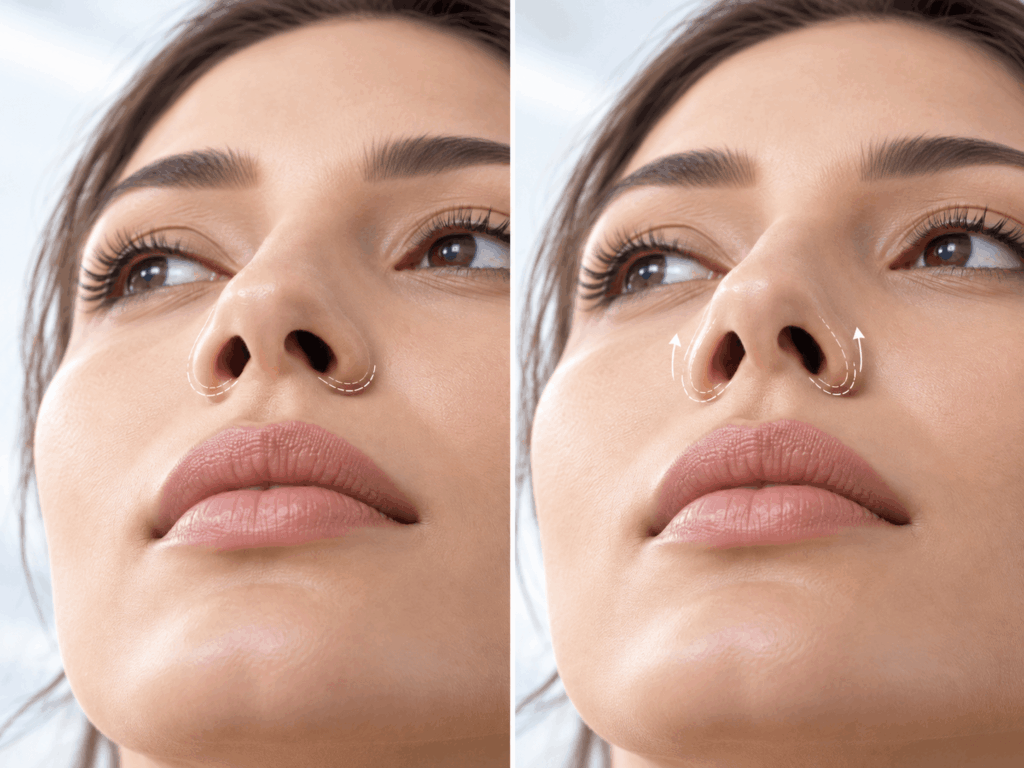
Temporary nostril asymmetry can occur during early recovery because swelling does not always resolve evenly.
One side may appear higher, firmer or more swollen than the other. Mild differences may improve as the tissues soften.
Observation may be appropriate when:
- The first operation was recent
- The position is still changing
- Significant swelling remains
- The scar tissue is not mature
- There is no serious breathing problem
- The skin and nostril margin remain healthy
Taping, massage or other postoperative methods should only be performed when recommended by the operating surgeon. Patients should not aggressively pull or massage the nostril rims without medical advice.
A mature structural retracted nostril after rhinoplasty is unlikely to move into the correct position through massage alone. When cartilage support or tissue is missing, surgical reconstruction may be required.
When Should Alar Retraction Correction Be Considered?
In most elective cases, revision surgery should be delayed until the nose has substantially healed.
Many surgeons wait around twelve months after the previous rhinoplasty. Some patients may need longer, particularly after multiple operations or extensive structural work.
Waiting allows:
- Swelling to decrease
- Scar tissue to mature
- The nostril position to stabilise
- Skin flexibility to improve
- The final structural problem to become clearer
- More accurate surgical planning
An earlier medical assessment is still appropriate when the patient has severe obstruction, infection, skin damage, progressive collapse or another urgent complication.
A consultation does not always mean that surgery should take place immediately. The surgeon may evaluate the problem, monitor healing and prepare a future plan.
How Is Alar Retraction Evaluated?
A detailed examination is essential because photographs alone do not reveal the full cause. During consultation, the surgeon may assess:
- Alar rim height
- Nostril shape and symmetry
- Skin flexibility
- Internal scar tissue
- Lower lateral cartilage position
- Nasal tip rotation
- Tip projection
- Columellar position
- External nasal valve strength
- Breathing through each nostril
- The condition of the internal nasal lining
- Available cartilage for grafting
The surgeon may also review preoperative photographs and the report from the first surgery. Patients should mention any previous:
- Rhinoplasty or septoplasty
- Nasal trauma
- Cartilage grafts
- Nostril reduction procedures
- Steroid injections
- Dermal filler treatments
- Breathing problems
- Postoperative infections
These details can significantly affect the plan for secondary rhinoplasty Turkey.
