





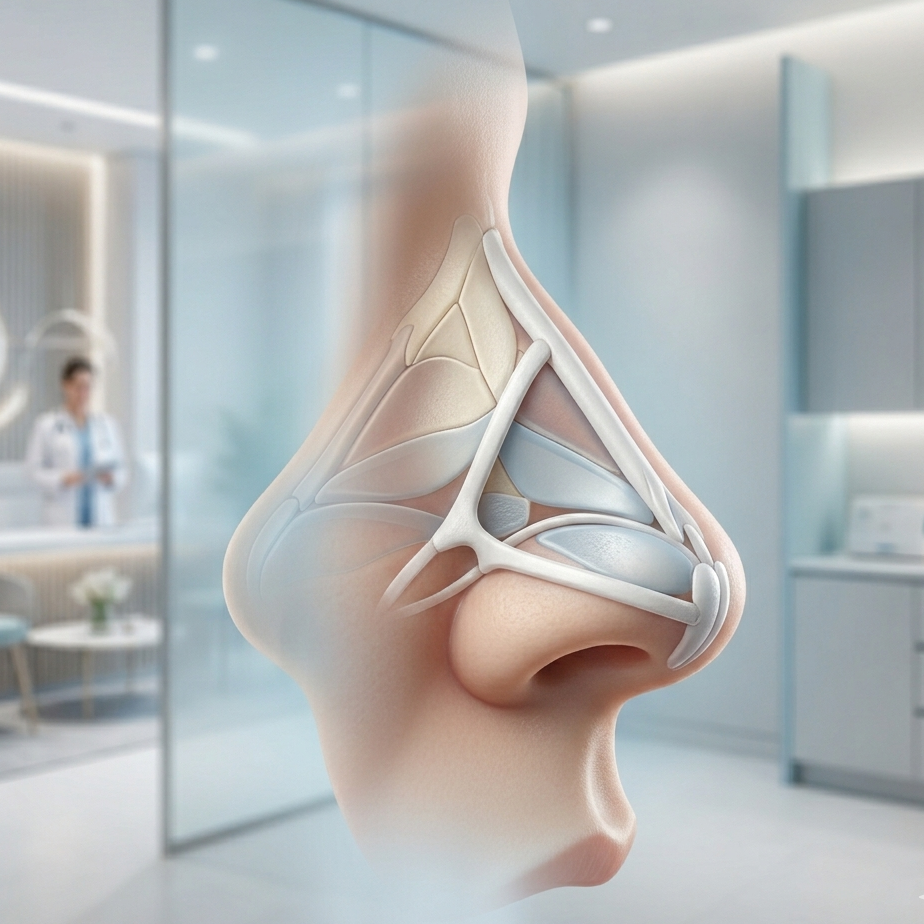
Fresh frozen rib cartilage is becoming one of the most talked-about materials in modern rhinoplasty, especially in complex primary cases and revision procedures where strong structural support is essential. As rhinoplasty techniques continue to evolve toward preservation, precision, and long-term stability, surgeons are paying closer attention not only to how the nose looks immediately after surgery, but also to how it holds its shape over time. In that conversation, fresh frozen rib cartilage has emerged as a highly valuable option.
For many years, surgeons performing advanced rhinoplasty relied mainly on septal cartilage taken from inside the nose, ear cartilage harvested from the patient, or autologous rib cartilage removed from the patient’s own chest. Each of these materials still has an important place in nasal surgery. However, not every patient has enough septal cartilage left for reconstruction, especially after previous surgery. Ear cartilage may be too soft or limited in quantity for major structural work. Traditional rib cartilage harvested from the patient can provide excellent strength, but it also adds another surgical site, more discomfort, and a chest scar that some patients would rather avoid.
This is where fresh frozen rib cartilage is changing the discussion. In carefully selected hands, it offers a strong, reliable grafting material that can help rebuild support, improve contour, and reduce the need for additional harvesting. For patients researching advanced rhinoplasty options, understanding why fresh frozen rib cartilage is gaining popularity can provide important insight into how modern nasal reconstruction is performed at a higher level.
What fresh frozen rib cartilage means in rhinoplasty
Fresh frozen rib cartilage is donor cartilage that has been processed, preserved under strict medical standards, and prepared for surgical use in reconstructive and aesthetic procedures. In rhinoplasty, it functions as a structural graft material that can be shaped and implanted to support or reshape different parts of the nose. It is especially useful when a patient does not have enough of their own cartilage available or when using the patient’s own rib would make the procedure more invasive than necessary.
The appeal of fresh frozen rib cartilage in rhinoplasty lies in its balance between strength and convenience. Septal cartilage is often considered the ideal graft source when available, but it is limited in volume. Ear cartilage is softer and better suited to more delicate refinements rather than major framework reconstruction. Rib cartilage, by contrast, is strong enough to build dorsal support, strengthen the septum, reconstruct the middle vault, and improve tip support in more demanding cases.
Because the material is already available and does not need to be harvested from the patient’s chest during surgery, the operation can be streamlined in a meaningful way. This does not remove the need for technical expertise. In fact, using fresh frozen rib cartilage well requires careful planning, proper carving techniques, and a strong understanding of structural rhinoplasty. But when those elements come together, the material can be extremely effective.
Why structural support matters so much in rhinoplasty
Modern rhinoplasty is not simply about reducing size or making the nose smaller. High-level rhinoplasty focuses on proportion, support, breathing, and long-term stability. A nose that looks refined in the early healing phase but lacks adequate structural support may become pinched, collapsed, irregular, or functionally compromised over time. This is particularly relevant in revision rhinoplasty, where the nose may already have lost support from previous tissue removal or scar-related distortion.
Fresh frozen rib cartilage has become popular because it serves the structural philosophy of contemporary rhinoplasty very well. It is strong enough to reinforce the nasal framework rather than merely camouflage a problem. In patients with dorsal irregularities, saddle nose deformity, internal weakness, or tip instability, stronger graft material often leads to more predictable long-term architecture.

This is one of the main reasons the material is increasingly associated with advanced rhinoplasty practice. Surgeons are moving away from overly reductive techniques and toward methods that preserve or rebuild form. Fresh frozen rib cartilage fits naturally into that shift.
Why patients and surgeons are drawn to fresh frozen rib cartilage
One of the biggest reasons fresh frozen rib cartilage is gaining popularity is that it can reduce the need for rib harvesting from the patient. Traditional autologous rib cartilage remains an excellent option, but it requires a separate incision on the chest, additional operative dissection, and a recovery component outside the nose itself. Some patients are comfortable with that trade-off, while others strongly prefer to avoid it.
By using fresh frozen rib cartilage, the surgeon may be able to achieve the strength of rib grafting without adding donor-site morbidity. This can mean less discomfort, no chest scar, and a more focused surgical recovery. For patients undergoing revision rhinoplasty or extensive reconstruction, this can be particularly attractive.
Another reason for its growing role is predictability in complex cases. When septal cartilage is depleted and ear cartilage is not enough, surgeons need a material that can provide meaningful structural power. Fresh frozen rib cartilage can be carved into spreader grafts, septal extension grafts, dorsal onlay grafts, columellar struts, and other supportive elements depending on the case. Its versatility gives surgeons more options when designing a stable and natural-looking result.
Why fresh frozen rib cartilage is especially relevant in revision rhinoplasty
Revision rhinoplasty is one of the areas where fresh frozen rib cartilage has generated the most interest. Secondary and tertiary nasal surgery often involve scar tissue, missing cartilage, weakened support, and an altered internal framework. In these cases, the surgeon is not simply refining an untouched nose. They are reconstructing a nose that may have already been over-resected, distorted, or functionally compromised.
Fresh frozen rib cartilage is particularly useful here because revision surgery frequently demands more material than primary surgery. The nose may require strong grafts to restore dorsal height, stabilize the tip, reopen narrowed internal structures, or rebuild symmetry. Patients who have already undergone one or more operations may also have little to no septal cartilage remaining. In that context, relying on ear cartilage alone may not be sufficient.
This is why many surgeons see fresh frozen rib cartilage as a practical and elegant solution in revision rhinoplasty. It provides the volume and strength needed for reconstruction while avoiding an additional donor-site procedure in patients who may already be emotionally and physically exhausted from previous surgeries.
Concerns about safety, warping, and long-term performance
Whenever a graft material becomes more widely used, questions naturally follow. Patients often want to know whether fresh frozen rib cartilage is safe, whether it can warp, whether it can resorb, and whether the body will tolerate it well. These are important questions, and they should always be discussed honestly during consultation.
In rhinoplasty, no graft material is perfect in every scenario. Septal cartilage, ear cartilage, autologous rib cartilage, and fresh frozen rib cartilage each have advantages and limitations. What matters most is not only the material itself but also how it is selected, processed, carved, and implanted. Surgical judgment remains central.
Warping has traditionally been one of the main concerns associated with rib cartilage in general. Experienced surgeons address this by using careful carving methods, balanced graft design, and strategic placement. Long-term performance also depends on tissue handling and case selection. In skilled hands, fresh frozen rib cartilage can perform well as part of a thoughtful reconstructive plan.
The growing popularity of this material is not based on convenience alone. It is tied to increasing comfort among experienced rhinoplasty surgeons who understand where it works best and how to use it responsibly. As with any advanced technique, outcomes depend heavily on expertise rather than trend.
Why it can support more natural-looking rhinoplasty results
Patients often assume that stronger graft material leads to a more artificial appearance, but that is not necessarily true. In reality, stronger structural support can be one of the keys to achieving a natural result. A nose tends to look unnatural not when it is properly supported, but when it has been over-reduced, pinched, twisted, or left unstable.
Fresh frozen rib cartilage can help maintain clean lines, smooth transitions, and better support of the tip and bridge. This is especially important in noses that require significant reshaping but still need to remain balanced with the rest of the face. A natural rhinoplasty result is not simply small or delicate. It is stable, proportionate, and consistent from multiple angles.
When used well, fresh frozen rib cartilage allows the surgeon to build rather than merely subtract. That philosophy often produces more sophisticated long-term outcomes because the nose is not forced into a shape that the underlying anatomy cannot support.
Candidate selection is still essential
Not every rhinoplasty patient needs fresh frozen rib cartilage. In many primary procedures, septal cartilage is more than enough to achieve the desired result. In smaller refinements, ear cartilage may be perfectly suitable. The decision depends on how much support is needed, what the patient’s anatomy allows, and whether the case is primary or revision.
Fresh frozen rib cartilage tends to be most relevant in patients who need substantial structural work, major dorsal augmentation, tip support, or reconstruction after previous surgery. It may also be considered in patients who want to avoid chest harvesting but still require the strength associated with rib grafting. The best candidates are identified through detailed examination, photographic analysis, airway assessment, and a realistic surgical plan.
This is why consultation is so important. The choice of graft material should never be based on marketing language alone. It should come from a surgeon’s assessment of the patient’s anatomy, goals, limitations, and long-term needs.
Why surgeon experience matters more than the material itself
Although fresh frozen rib cartilage is gaining popularity, it should never be viewed as a magic shortcut. Its success depends on the surgeon’s ability to integrate it into an overall rhinoplasty strategy. Carving, shaping, stabilizing, and positioning grafts require judgment developed through extensive experience. In rhinoplasty, small technical decisions can have major consequences months or years later.
An experienced surgeon understands when fresh frozen rib cartilage is the best option and when another graft source would be more appropriate. They also understand how to balance structural strength with aesthetic softness so that the result does not look heavy, rigid, or overbuilt. This balance is part of what separates advanced rhinoplasty from routine nasal reshaping.
The growing interest in fresh frozen rib cartilage reflects a broader trend in the field. Patients and surgeons alike are valuing durable structure, functional integrity, and natural long-term results. In that environment, materials that support sophisticated reconstruction naturally receive more attention.
The future of grafting in advanced rhinoplasty
Rhinoplasty continues to move toward more individualized, anatomy-driven planning. As surgeons refine their techniques and patients become more informed, grafting strategies are also becoming more nuanced. Fresh frozen rib cartilage fits into this future because it expands the reconstructive toolbox without automatically increasing invasiveness.
Its popularity is likely tied not just to convenience, but to the way it supports modern goals in nasal surgery. These goals include preserving function, restoring support, creating facial harmony, and delivering results that age well over time. In complex cases, especially revision rhinoplasty, those priorities often require stronger materials and a more thoughtful framework-based approach.
Final thoughts
Fresh frozen rib cartilage is gaining popularity in rhinoplasty because it answers several major needs at once. It offers strength for structural support, versatility for complex reconstruction, and the possibility of avoiding chest harvesting in appropriate patients. For revision rhinoplasty in particular, it can be an important option when the nose no longer has enough native cartilage available for proper rebuilding.
Its rise in popularity also reflects a deeper change in rhinoplasty itself. The field is increasingly focused on support rather than over-reduction, on stability rather than short-term appearance, and on individualized reconstruction rather than one-size-fits-all reshaping. In that context, fresh frozen rib cartilage has become more than an alternative graft source. It has become part of a more advanced philosophy of nasal surgery.
For patients considering rhinoplasty or revision rhinoplasty, the key question is not simply whether fresh frozen rib cartilage is popular. The more important question is whether it is appropriate for their anatomy and surgical goals. When selected carefully and used by an experienced surgeon, it can be a highly effective tool in achieving a stable, functional, and natural-looking result.
