





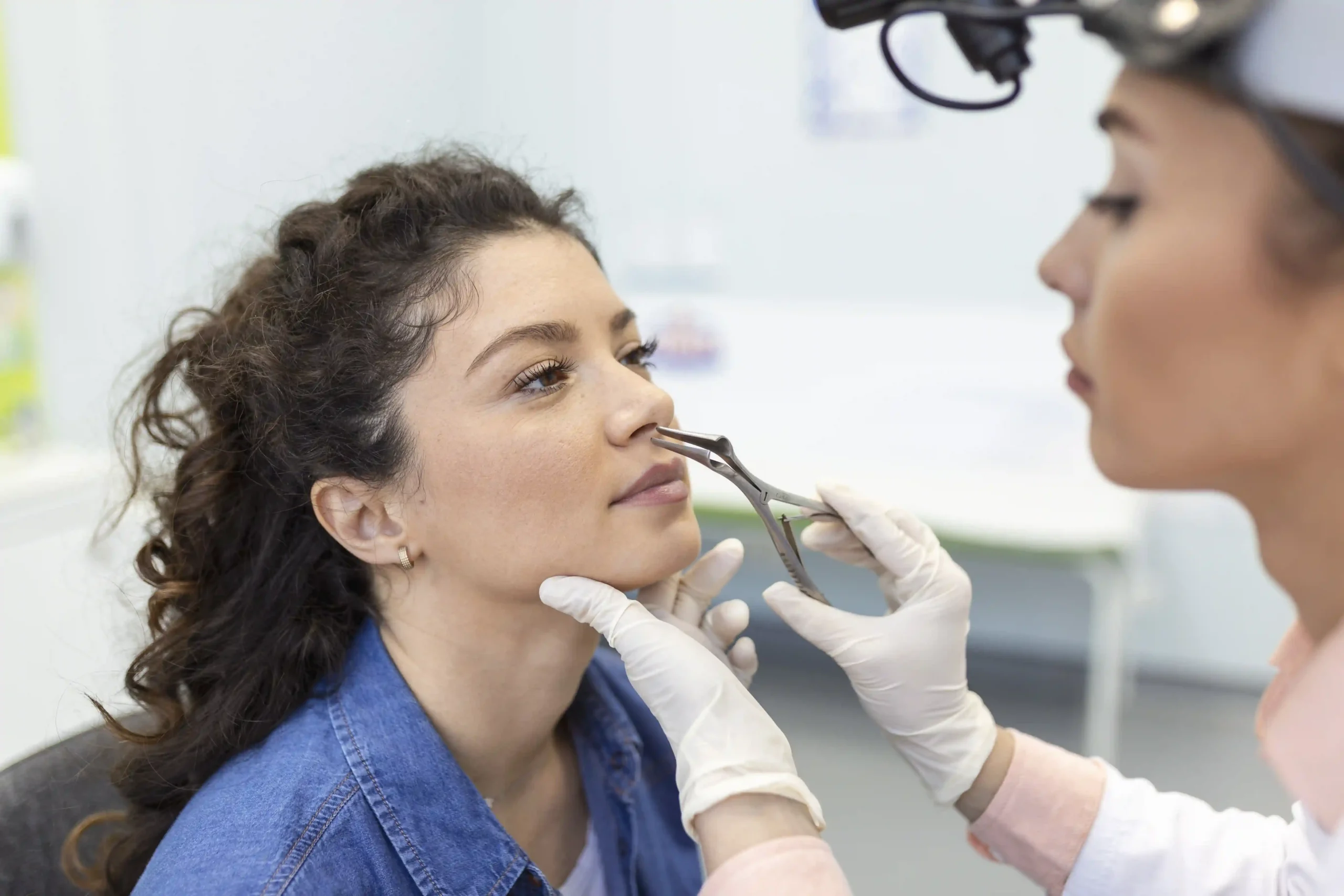
You’ve seen the videos. Someone sits in a clinic chair, a practitioner injects a few syringes into their nose, and twenty minutes later, a completely different profile. No bruising. No bandages. They’re eating lunch the same afternoon.
It looks almost too easy.
And that’s precisely where the problem starts.
A non-surgical nose job, also called liquid rhinoplasty or a liquid nose job, has exploded in popularity worldwide, and Turkey has become one of the most sought-after destinations to get one. Cheaper than the UK. More accessible than the US. Clinics are everywhere. Instagram is full of the results.
But before you book that flight to Istanbul, there are things you need to understand. Real risks that some clinics won’t volunteer. A reversal process that’s more nuanced than “just dissolve it.” And a clear-eyed look at what separates a brilliant outcome from a genuinely dangerous one.
This blog gives you all of it, no sugarcoating, no scare tactics.
Just the information you deserve to make a smart, safe decision.
What is a Non-Surgical Nose Job?
A non surgical nose job uses injectable dermal fillers, most commonly hyaluronic acid, to reshape the nose without surgery. The procedure takes 15–30 minutes, requires no anesthesia or incisions, and results are visible immediately. Effects last 9–18 months and are reversible using an enzyme called hyaluronidase.
What a Non-Surgical Nose Job Can (and Cannot) Do
The appeal of liquid rhinoplasty is real. Let’s be honest about that. If you have a small dorsal hump you’ve hated since your teenage years or a tip that droops just slightly more than you’d like, a skilled injector can create a genuinely impressive visual correction, often in the time it takes to drink a coffee.
Here’s what the procedure actually addresses well:
- Dorsal humps: Filler placed above and below the bump creates the optical illusion of a smoother bridge.
- Tip projection: Strategic volume at the tip can add definition and upward rotation.
- Asymmetry: Minor irregularities on one side can be balanced.
- Radix (bridge height): A low bridge can be augmented for more definition.
Here’s what it absolutely cannot do: make your nose smaller.
Fillers add volume. They cannot remove tissue, bone, or cartilage. If your goal is a narrower nose, reduced nostrils, or better airflow, you need surgical rhinoplasty, full stop. Any clinic that suggests otherwise is not being honest with you.
Note: If you have questions about what rhinoplasty is, you can check our Rhinoplasty in Turkey page.
The Real Risks of Non-Surgical Rhinoplasty
Most clinics will tell you the risks are “minor.” They’ll mention swelling, bruising, and temporary asymmetry. That’s true, those are common, and they resolve on their own.
But there are rarer, more serious risks that deserve a direct conversation.
Vascular Occlusion: The Complication That Changes Everything
This complication is the one risk you must understand before going anywhere near a filler needle pointed at your nose.
The nose has a dense, interconnected network of blood vessels. When filler is accidentally injected into one of those vessels, or compresses one from the outside, it can block blood flow to the surrounding tissue. That blockage is called vascular occlusion, and if it isn’t caught and treated within hours, the consequences can include skin necrosis (tissue death) and, in the most severe cases, vision loss.
The last one often leaves people stunned when they hear it for the first time. Vision loss from a nose filler? Yes, because the blood supply to the nose shares connections with the ophthalmic artery, which feeds the eye. Filler that travels upstream through those vessels has, in documented cases, caused permanent partial or complete blindness.
To be clear: these outcomes are rare. But “rare” is not “impossible,” and the nose is classified as a high-risk injection zone by virtually every major plastic surgery body, including the American Society of Plastic Surgeons.
As Dr. Michelle Lee, an ASPS Member Surgeon, has stated, the injection site carries real potential for adverse events including skin necrosis and irreversible blindness, which is why choosing a provider carefully is non-negotiable.
Other Risks Worth Knowing
- Filler migration: Over time, filler can shift from its original placement, creating an uneven or unnatural appearance.
- Nodule formation: Hard lumps can develop under the skin, sometimes requiring dissolution or surgical removal.
- Infection: Any injection can cause an infection, but this is rare when done correctly.
- Overcorrection: Too much volume, placed incorrectly, can actually make features look worse — and with previous filler in the tissue, subsequent corrections become more complex.
Can a Non Surgical Nose Job Be Reversed?

Yes, but the answer is more nuanced than the marketing implies.
If hyaluronic acid (HA) filler was used, yes, reversal is genuinely possible. HA fillers (brands like Juvederm, Restylane, and RHA) can be dissolved by injecting hyaluronidase, an enzyme that breaks down hyaluronic acid. The process typically takes effect within 24–48 hours. In emergency situations, like a suspected vascular occlusion, this reversal needs to happen within the first hour to prevent serious damage.
This is why every reputable clinic should have hyaluronidase physically in the room during your procedure. If they don’t, leave.
The important caveat: Not all fillers are reversible. Calcium hydroxylapatite (sold as Radiesse) cannot be dissolved with hyaluronidase. Some practitioners use it in the nose for longer-lasting results, but the inability to reverse it quickly in an emergency is a significant safety disadvantage. Most experts recommend sticking exclusively to HA fillers for nasal injection precisely because of this.
Reversal for cosmetic reasons, you don’t like the result, is generally straightforward when done by the original injector or an experienced practitioner. Reversal in an emergency context is a medical intervention that must happen fast. That’s a meaningful distinction.
How to Choose a Safe Clinic for Liquid Rhinoplasty in Turkey
This is the section that could actually protect you. Treat it like a checklist.
Verify Credentials — Before You Book, Not After
Look specifically for:
- Membership in TPRECD/TSPRAS (the Turkish Society of Plastic, Reconstructive and Aesthetic Surgeons), verifiable in their public directory
- ISAPS or EBOPRAS membership, both have searchable member databases
- Board certification in plastic surgery, not just “aesthetic medicine” (a broader and less rigorous category)
A nurse or therapist offering liquid rhinoplasty is a significant red flag for a nasal procedure specifically. The nose’s vascular anatomy is complex enough that most experts recommend only board-certified plastic surgeons or facial plastic surgeons perform nasal injections.
Ask These Specific Questions at Consultation
“What filler do you use, and do you have hyaluronidase on-site?”
The answer should be: HA filler (a named brand, Juvederm, Restylane, etc.) and yes, hyaluronidase is in the room. If they’re cagey about the filler brand or can’t confirm hyaluronidase is available, walk out.
“What is your emergency protocol if I show signs of vascular occlusion?”
A trained provider will give you a clear, immediate answer about recognising the signs (blanching, pain, mottling) and dissolving with hyaluronidase within minutes. Hesitation here is disqualifying.
“How many nasal filler procedures have you personally performed?”
Volume matters. The nose is not the place for someone gaining experience.
Note: If you want to know more about what to ask during your rhinoplasty consultation, check out our How to Talk to Your Turkish Rhinoplasty Surgeon page. And for choosing the right rhinoplasty surgeon, you can check out our dedicated blog.
Check Product Transparency

Ask to see the filler packaging. You want a CE-marked or FDA-approved product, not a grey-market alternative that may have been stored improperly or isn’t what the label says.
| What a Safe CLINIC Does | WarnIng Signs |
|---|---|
| Uses named HA filler brands | Vague about product used |
| Stocks hyaluronidase in-room | Can’t confirm reversal agent on-site |
| Surgeon holds TPRECD/ISAPS credentials | Provider credentials unclear or only “aesthetic cert” |
| Detailed emergency vascular protocol | No answer or dismissal of the question |
| Full consultation before any injection | Pushes for same-day treatment without assessment |
| Provides written aftercare instructions | Minimal follow-up plan |
Note: You can directly demand a consultation from the best rhinoplasty surgeon in Turkey Dr. Cem Altindag.
Who Should Not Get a Non-Surgical Nose Job
Liquid rhinoplasty is not appropriate for everyone, and being clear-eyed about this early saves heartache later.
You’re likely not a good candidate if:
- You want your nose to be significantly smaller, that requires surgery
- You’ve had multiple previous rhinoplasty surgeries, altered vascular anatomy raises your risk substantially
- You’re looking for permanent results, fillers dissolve; you’ll need maintenance every 9–18 months
- You have active skin infections near the nose or are currently pregnant
- You have a history of severe allergic reactions to filler components
- You have autoimmune conditions affecting connective tissue
The right candidate for a non surgical nose job wants subtle refinements, is comfortable with temporary results, and has had a proper consultation confirming their specific anatomy is suitable.
Note: Check out our ideal rhinoplasty candidate page to understand if what you need is rhinoplasty or not.
Non Surgical vs Surgical Rhinoplasty in Turkey: The Honest Comparison
Imagine two patients, same goal: a more balanced nose profile. One chooses liquid rhinoplasty in Istanbul for €300–600. The other opts for surgical rhinoplasty for €2,750–4,000. Who made the right call?
It entirely depends on what they’re trying to achieve.
| Factor | Non surgıcal Rhınoplasty | Surgıcal Rhınoplasty |
|---|---|---|
| Procedure time | 15–30 minutes | 1–3 hours |
| Downtime | Minimal (hours) | 1–2 weeks |
| Results | Immediate, temporary (9–18 months) | Permanent |
| Reversible | Yes (HA fillers) | No |
| Can reduce nose size | No | Yes |
| Cost in Turkey | ~€300–600 | ~€2,750–4,000 |
| Fixes breathing issues | No | Yes |
| Cumulative cost (5 years) | Higher if maintained | Lower overall |
The non surgical route makes sense for minor optical corrections where you want flexibility and fast recovery. Surgery wins decisively for significant reshaping, size reduction, structural changes, or anyone who wants a once-and-done result.
Neither is universally “better.” The right answer is whichever matches your actual goals and anatomy.
Note: Check out our nose job turkey cost page to understand general rhinoplasty costs. If you want comparison, you can check our Nose Job Turkey Cost vs. UK and US blog. If you want to deep dive into non-surgical nose job turkey costs, check out that blog.
Conclusion
A non surgical nose job in Turkey can be a smart, well-executed procedure, or a regrettable decision made in a rush. The difference almost always comes down to one thing: who is holding the syringe.
The risks of liquid rhinoplasty are real, the most serious ones are genuinely rare, and the reversal option with HA fillers is a meaningful safety net, when the right product was used and the right provider is available. Turkey offers some genuinely excellent practitioners with world-class credentials. It also has clinics you should avoid entirely.
Do your research before you book. Ask the hard questions. Verify the credentials. And if a clinic makes you feel like you’re being awkward for asking about their emergency protocols, that’s the answer you needed.
What is the most serious risk of a non surgical nose job?
Vascular occlusion is the most serious risk, where filler blocks or compresses a blood vessel, cutting off blood supply to surrounding tissue. In rare cases, this can lead to skin necrosis or, through connected vessels, partial vision loss. The risk is significantly reduced when performed by a trained specialist using proper technique and HA fillers with hyaluronidase on hand.
How long does a non surgical nose job last in Turkey?
Results typically last between 9 and 18 months, depending on the type of hyaluronic acid filler used, your individual metabolism, and the volume injected. Maintenance treatments are usually required to sustain results. Some patients find their filler lasts closer to the shorter end in areas of high movement.
Is a non surgical nose job in Turkey safe?
It can be, but safety is entirely dependent on the provider’s qualifications and the clinic’s protocols, not the country itself. Turkey has excellent board-certified surgeons. It also has under-regulated clinics. Verifying TPRECD/ISAPS membership, confirming HA filler use, and ensuring hyaluronidase is on-site are the three non-negotiable safety checks before any appointment.
Can a non surgical nose job be fully reversed if I don’t like the result?
Yes, if hyaluronic acid filler was used. Hyaluronidase dissolves HA filler within 24–48 hours in most cases. Non-HA fillers like Radiesse cannot be reversed this way, which is one reason most nose filler specialists stick to HA products. Reversal for cosmetic dissatisfaction is straightforward; reversal in a vascular emergency must happen within minutes.
Who is a good candidate for liquid rhinoplasty?
Good candidates want subtle refinements, smoothing a small hump, adding tip definition, improving symmetry, and are comfortable with temporary results and maintenance appointments. It’s not suitable for patients wanting a smaller nose, fixing breathing issues, or avoiding repeat procedures. A thorough consultation with a qualified practitioner is essential to confirm suitability.
What should I ask a clinic in Turkey before booking a non surgical nose job?
Ask: which filler brand they use; whether hyaluronidase is physically in the room during the procedure; what their emergency protocol is for suspected vascular occlusion; and what credentials the specific injector holds. Demand direct answers. Any clinic that’s vague or dismissive about these questions is one to avoid.
